What is rental assistance NJ and who can qualify in New Jersey?
Rental assistance NJ refers to New Jersey programs that help eligible households afford rent through vouchers or payments made on their behalf. If you’re low-income, elderly, disabled, or at risk of homelessness, New Jersey rental assistance options may reduce rent burden and help you stay housed.
In this post, we’ll explore rental assistance NJ. Securing affordable housing in New Jersey can be a daunting challenge, especially for low-income families, individuals, and vulnerable populations. In New Jersey, various rental assistance programs are available to help alleviate the financial burden of rent payments and ensure access to safe and decent housing. In this comprehensive guide, we’ll explore the different rental assistance options in the state, their eligibility requirements, and application processes.
Choose your path: Pick the section that matches your situation (then come back for the others).
Intermediate: On a waitlist
Advanced: Landlord/participant compliance
Rental Assistance New Jersey
Rental assistance programs in New Jersey are designed to provide housing subsidies to very low-income residents, ensuring they can afford decent, safe, and sanitary housing. These programs aim to bridge the gap between household income and the cost of rent, making housing more accessible and preventing homelessness. The assistance is typically provided in the form of vouchers or direct payments to landlords, covering a portion of the rent.
NJ State Rental Assistance Program (SRAP)
The State Rental Assistance Program (SRAP) is a state-funded initiative administered by the New Jersey Department of Community Affairs (DCA). It offers housing subsidies to eligible New Jersey residents, helping them secure affordable rental units. (nj.gov)
Eligibility Requirements
To qualify for SRAP, applicants must meet the following criteria:
- Be a resident of New Jersey for at least six months before applying.
- Meet the income limits for the county where they plan to reside. Income limits vary by county and household size.
- Fall into one of the following categories:
- Elderly: The head of household must be 62 years of age or older.
- Family: The head of household is 18 years of age or an emancipated minor, with or without children.
- Disabled: The head of household or spouse must be permanently disabled.
- Homeless: The household lacks a fixed, regular, and adequate nighttime residence.
NJ DCA Application Process
The SRAP application process typically involves the following steps:
- Open Enrollment Period: The DCA announces an open enrollment period, during which pre-applications can be submitted online. This period is usually limited and lasts for a few weeks. (nj.gov)
- Pre-Application Submission: Applicants must complete and submit a pre-application online during the open enrollment period. Only one pre-application per household is accepted.
- Lottery Selection: After the open enrollment period closes, the DCA conducts a lottery to select a predetermined number of pre-applications for each category (elderly, family, disabled, and homeless). (nj.gov)
- Waiting List Placement: Selected pre-applications are placed on the SRAP waiting list based on their category and lottery ranking.
- Eligibility Interview: When funding becomes available, applicants are contacted from the waiting list for an eligibility interview. During this interview, they must provide proof of residency, income, disability (if applicable), and homelessness (if applicable).
- Voucher Issuance: If found eligible, the applicant will receive a SRAP voucher, which can be used to secure housing from participating landlords.
It’s important to note that submitting a pre-application does not guarantee placement on the waiting list or the issuance of a SRAP voucher. The process is competitive, and the number of available vouchers is limited.
 Landlord Information
Landlords play a crucial role in the SRAP program. Once a tenant receives a SRAP voucher, the landlord must agree to participate in the program and comply with its requirements, such as maintaining decent, safe, and sanitary housing conditions. The DCA will make direct payments to the landlord on behalf of the tenant, covering a portion of the rent.
Trying to navigate rental assistance NJ programs without missing a deadline? Get help understanding eligibility, documents, and next steps.
Housing Choice Voucher (Section 8) Program
The Housing Choice Voucher Program, commonly known as Section 8, is a federal program administered by the U.S. Department of Housing and Urban Development (HUD). In New Jersey, the program is managed by local public housing agencies (PHAs).
The Housing Choice Voucher Program provides rental assistance to low-income families, the elderly, and individuals with disabilities. Eligible participants receive a voucher that covers a portion of their rent, and they are responsible for finding suitable housing from landlords who participate in the program.
To apply for the Housing Choice Voucher Program in New Jersey, you must contact your local PHA and follow their application process. Eligibility is based on factors such as income limits, family composition, and citizenship or immigration status.
Homelessness Prevention Program (HPP)

County and City-Specific Rental Assistance Programs
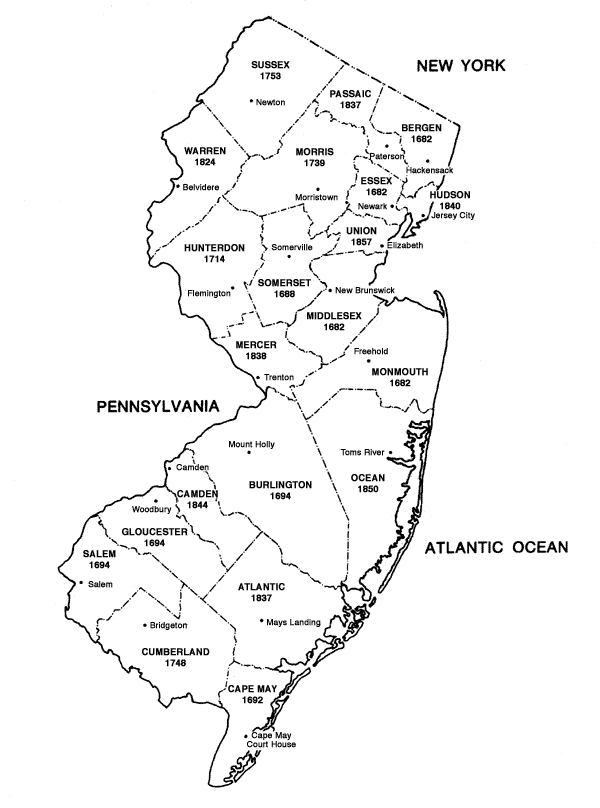
In addition to state-level programs, many counties and cities in New Jersey offer their rental assistance initiatives. These programs may have different eligibility criteria, application processes, and funding sources. Here are a few examples:
Essex County
Essex County offers the Emergency Rental Assistance Program (ERAP), which provides temporary rental assistance to eligible households impacted by the COVID-19 pandemic. The program is funded through federal Emergency Rental Assistance (ERA) funds.
Newark
The City of Newark has the Newark Rental Assistance Program, which provides rental assistance to low-income residents who are facing housing instability or homelessness. The program is funded through various sources, including federal grants and city funds.
Camden County
Camden County offers the Camden County Rental Assistance Program, which provides rental assistance to eligible households impacted by the COVID-19 pandemic. The program is funded through federal ERA funds.
Middlesex County
Middlesex County has the Middlesex County Emergency Rental Assistance Program, which provides rental assistance to eligible households impacted by the COVID-19 pandemic. The program is funded through federal ERA funds.
It’s important to note that the availability and eligibility criteria for these programs may change over time, so it’s recommended to check with your local county or city for the most up-to-date information.
Additional Resources for Affordable Housing in NJ and FAQs
In addition to rental assistance programs, New Jersey offers other resources and initiatives to support affordable housing:
- Public Housing: Managed by local PHAs, public housing provides decent and safe rental housing for eligible low-income families, the elderly, and individuals with disabilities.
- Project-Based Section 8: This program provides rental assistance for specific housing units owned and operated by private landlords.
- Low-Income Housing Tax Credit (LIHTC): The LIHTC program encourages the development of affordable rental housing by providing tax credits to developers.
- Nonprofit Organizations: Various nonprofit organizations in New Jersey offer housing counseling, financial assistance, and other supportive services to help individuals and families secure affordable housing.
Common Questions About Rental Assistance NJ
How do I know which NJ rental assistance program to start with?
What should I prepare before applying for rental assistance NJ programs?
What happens after I’m placed on a waiting list?
Can a landlord refuse a voucher?
Does New Jersey rental assistance cover arrears and security deposits?
NJ DCA Check Status and Frequently Asked Questions (FAQs)
Q: How do I apply for rental assistance in New Jersey?
A: The application process varies depending on the specific program. For state-level programs like SRAP and HPP, you typically need to follow the open enrollment periods and submit pre-applications or applications online or through designated channels. For county or city-specific programs, you should contact the respective housing authority or agency for their application procedures. Also, check out NYC Rental assistance programs.
Q: What documents are required for rental assistance applications?
A: Common documents required for rental assistance applications include proof of income (pay stubs, tax returns, etc.), proof of residency, identification documents, and documents related to your specific situation (e.g., disability verification, homelessness certification).
Q: Can I receive rental assistance if I’m not a U.S. citizen?
A: Eligibility requirements for rental assistance programs may vary, but many programs are open to non-citizens who meet certain criteria, such as having a valid immigration status or being a permanent resident.
Q: How long does it take to receive rental assistance?
A: The processing time for rental assistance applications can vary depending on the program and the volume of applications received. Some programs may have waiting lists, which can extend the wait time. It’s best to inquire with the specific program or agency for an estimated timeline.
Q: Can I apply for multiple rental assistance programs simultaneously?
A: In some cases, you may be able to apply for multiple rental assistance programs simultaneously, as long as you meet the eligibility criteria for each program. However, it’s important to disclose any other assistance you are receiving or have applied for to avoid duplication or conflicts.
Q: What happens if my circumstances change after receiving rental assistance?
A: If your household income or circumstances change significantly after receiving rental assistance, you must report these changes to the program administrator. Your eligibility and assistance amount may be reevaluated based on the new information.
Q: Can I choose where to live with a rental assistance voucher?
A: With programs like the Housing Choice Voucher (Section 8), you have the flexibility to choose where to live, as long as the rental unit meets the program’s requirements and the landlord agrees to participate. However, with project-based assistance, you must live in a specific housing development.
Q: Are there any resources for landlords participating in rental assistance programs?
A: Yes, the DCA and other housing authorities provide information and resources for landlords participating in rental assistance programs. This includes guidance on program requirements, fair housing laws, and the process for receiving rental payments on behalf of tenants.
By understanding the various rental assistance programs available in New Jersey, their eligibility criteria, and application processes, you can take the first step towards securing affordable housing for yourself or your family. Remember to explore all options and seek assistance from local housing authorities or nonprofit organizations if needed.
Get Step-by-Step Help With Rental Assistance NJ Applications
If you’re trying to secure affordable housing in New Jersey, support can make the process faster and less stressful.
- Figure out which New Jersey rental assistance program fits your situation
- Organize documents and avoid common application mistakes
- Understand voucher rules and landlord requirements
- Plan next steps while you’re on a waiting list


[…] County rent relief agencies […]