Home Blog Page 11

The Impact of the Alachua County, FL Emergency Rental Assistance Program on Local Housing Stability

0

Alachua County, FL Emergency Rental Assistance Program: A Lifeline for Vulnerable Families

The Alachua County Emergency Rental Assistance Program was created to help residents in the county affected by the high cost of living pay their past-due rent and utility bills. If you are experiencing financial hardship as a result of inflation and meet certain eligibility requirements, you may be able to receive assistance through this program.

Need Help Paying Rent in Alachua County?

You may qualify for Alachua County’s Emergency Rental Assistance Program (ERAP), which can provide up to $20,000 toward past-due rent, utilities, and even future rent. If your household has faced financial hardship or unemployment, support is available.

Check Your ERAP Eligibility

OUR Florida’s Emergency Rental Assistance Program
Florida Emergency Rental Assistance Program

You can’t apply for financing from both of these programs at the same time. If you deliberately apply for and receive funds from both programs, your conduct may be considered fraudulent. It may result in a refusal of the application, disqualification for future assistance, and criminal investigation.

The Program’s Overview

The Programs Overview

To help those who are unable to pay their rent or utility bills because of the high cost of living outbreak, Alachua County has established the Alachua County Emergency Rental Assistance Program (ERAP). Eligible households may receive assistance with late rent and utility payments, as well as help with rent payments in advance. Payments are typically provided to property managers and landlords, not to individual families. The maximum amount of aid that can be given to any household is $20,000.

“High Priority” homes identified by the U.S. Department of the Treasury as those with a household member who has been unemployed for at least ninety days will be prioritized for financial assistance. Submissions will only be processed for those with high priority during the first three weeks of the program (the timeline may be extended based on the volume of applications received).

Rent and utility aid is available through the Alachua County Emergency Rental Assistance Program (ERAP), which was set up to help residents of Alachua County affected by the high cost of living. This program necessitates the submission of numerous pieces of evidence to determine a household’s eligibility and, if so, the amount of financial aid offered. Alachua County’s ERAP Helpline can be contacted at 352-704-0301 for assistance with this application.

Please call the Equal Opportunity Office at (352) 374-5275 or (352) 374-5284 TDD if any special considerations are required for persons with disabilities.

Please check your spam folder if you have not received any emails from Neighborly Software or AlachuaERAPhelp@alachuacounty.us regarding this program’s correspondence.

Both the tenant and the landlord are outlined in the following sections. To proceed, both parties should discuss and agree on whether they are both willing and able to go through with the online application, supply all the requisite documents, and adhere to all the requirements.

Tenant Eligibility Standards:

Tenant Eligibility Standards

Must be a resident of the county and have rent responsibilities for the property in arrears (late rent payments or at risk of non-payment) as their primary residence, and 2.

At least one adult identified on the lease must have been unemployed on or after March 13, 2020, to be eligible for unemployment benefits or a loss in household income owing to the coronavirus outbreak.

There must be one or more individuals in the household who can show a danger of homelessness or housing instability, such as past-due rent or utility notices, court-issued eviction notices, unsafe or unhealthy conditions in the home, or documented inability to pay future rent.
 

How the St. Petersburg Emergency Rental Assistance Program Supports Families in Crisis

0

St. Petersburg, FL ERAP

St. Petersburg, FL rental assistantTo achieve its objective, the St. Petersburg Housing Authority (SPHA) strives to offer qualified people of St. Petersburg safe, clean, accessible, decent, and affordable housing while strengthening and fostering local self-sufficiency.



The SPHA administers three housing programs: public housing, affordable housing, and housing choice vouchers (HCVs). Together, these programs provide decent, long-term housing choices for about 4,000 low-income families who meet the eligibility requirements.

Trying to Get Housing Assistance in St. Petersburg?

Whether you’re seeking affordable housing options, need help understanding the Jordan Park Project-Based Voucher waiting list, or want guidance on eligibility, support is available. Get clear information so you don’t miss important deadlines or opportunities for assistance.

Get Help With St. Petersburg Housing Programs

The St. Petersburg Homes Authority offers various programs, including affordable rental housing to low-income families, the elderly, veterans, and the disabled throughout the greater St. Petersburg metropolitan area.

Jordan Park Waiting List

Jordan Park Waiting List

To be considered for the Jordan Park PBV Waiting List, the St. Petersburg Housing Authority (SPHA) will take pre-applications beginning on Monday, February 07, 2022, and continuing through 5:00 p.m. on Thursday, February 10, 2022 (both Eastern Standard Time). The SPHA is taking pre-applications online here  (Spanish Public Health Agency). The deadline for pre-applications is 5:00 p.m. EST on Thursday, February 10, 2022. No applications will be accepted after that time.

To be eligible for the Jordan Park PBV units, applicants must have an income that does not exceed 60% of the average median income (AMI) for Pinellas County, as established by the Department of Housing and Urban Development (HUD) on an annual basis. Following is a list of the current HUD income limits for Pinellas County, Florida:

2021 HUD INCOME LIMITS

Number in Household 60% AMI
1 $31,020
2 $35, 460
3 $39,900
4 $44,280
5 $47,880
6 $51, 420


A list of Frequently Asked Questions (FAQs) about the waiting list opening can be accessed HERE.

If you need assistance applying, there are two locations where you can go.

  • Tuesday, February 8, 2022, 8 AM to 12 PM SPHA Central Office (2001 Gandy Blvd N., St. Petersburg, FL 33702)
  • Wednesday, February 9, 2022, 12 PM to 4 PM Jordan Park Management Office (1245 Jordan Park Street S., St. Petersburg, FL 33712)

Jordan Park Project-Based Voucher Waiting List

Frequently Asked Questions
February 2022

1. What is a Project-Based Voucher (PBV)?

ordan Park Project-Based Voucher Waiting List

Project-based vouchers are rental assistance vouchers attached to a specific unit in a building that has a contract with the Housing Authority to provide rental help. The Housing Authority pays the landlord a portion of the negotiated rent on the Participant’s behalf as a housing assistance payment. The Participant is responsible for the remainder of the rent, which is approximately equal to 30 percent of their monthly income, as well as for utility bills.

2. What is the difference between the Tenant-Based and Project-Based Vouchers on the Jordan Park waiting list?

Tenant-based vouchers help families in the private renting market by providing financial assistance for rent. Candidates are given a voucher to choose any housing that satisfies the program’s qualifications. A Tenant-Based Voucher is the only assistance available to those selected for the Tenant-Based Waiting List.

As a result, Project-Based Vouchers offer rental assistance related to one specific unit at one particular building.

The Tenant-Based Waiting List cannot be transferred from the Project-Based Waiting List.

3. What are the Jordan Park Project-Based Waiting List’s pre-application requirements?

Applicant income must not exceed 60% of Pinellas County’s AMI, as established annually by HUD, to qualify for Jordan Park PBV homes. The following are Pinellas County’s current HUD Income Limits:

4. Which names on this waiting list will be prioritized the most?

Which names on this waiting list will be prioritized most

Some residents and families have been forced to leave their homes for the following reasons: People who live in buildings that SPHA owns have been given a “90-Day Notice to Vacate” by the government (federal, state, or local). i. A building in which SPHA has an interest has been condemned or demolished by government action (federal, state, or local).

Families moved from SPHA’s public housing units or low-income tax credit properties are in the second group. Families

In the process of being demolished, renovated, or repurposed, or that have already been moved from SPHA-owned land. Before being chosen from the waitlist, the move must have happened in the last five years.

SPHA will choose a person or family who lives, works, or has worked in Pinellas County as a Resident of Pinellas County after meeting the first and second priorities. If you want to be chosen, you’ll have to show that you want to be chosen.

5. How do I apply for the Jordan Park Project-Based Wait List if I am eligible?

Online pre-applications for the St. Petersburg Housing Authority’s Jordan Park PBV waiting list will be accepted at 8:00 a.m. EST on Monday, February 7th, 2022, through 5:00 p.m. EST on Thursday, February 10th, 2022.

No pre-applications will be allowed after the 5:00 p.m. EST deadline on Thursday, February 10, 2022.

Need Help Paying Rent in St. Petersburg?

🏠 The St. Petersburg Housing Authority is accepting applications for the Jordan Park Project-Based Voucher Program.

  • ✅ Affordable rent based on your income
  • ✅ Designed for low-income families, veterans, seniors, and individuals with disabilities
  • ✅ Local support centers available for help with applications

📅 Don’t miss the deadline—get housing support now.

📝 Apply for Assistance

📍 Support available in-person February 8 & 9 at local offices.

Delaware County Emergency Rental Assistance Program (DELCO ERA)

0

Delaware County Emergency Rental Assistance Program (DELCO ERA)

DELCO Emergency Rental Support (DELCO ERA) provides rent and utility assistance to tenants who experienced disruption and loss of income during or as a result of the high inflation pandemic.

Since April 2021, DELCO ERA has committed or expended the entire $37.275 million initial allocations of Emergency Rental Assistance money, assisting 5,150 low-income renters in remaining in their homes.

The United States Treasury and the Commonwealth of Pennsylvania have provided Delaware County with an additional $30.384 million in financing, which will enable DELCO ERA to continue serving the high cost-of-living recovery needs of Delaware County renters and landlords.

Delaware County desires to express its gratitude to our community partners, our Program Manager, Capital Access, as well as applicants and landlords who have contributed to DELCO ERA’s outstanding accomplishment.

This is a collaborative effort. Onward!

Register for the Delaware County ERA via the Delaware County ERA Registration page. The application process is divided into several stages:

The application process is divided into several stages


Registration. This procedure consists of two steps. The first step is to register your information using this link. You will then receive an email with instructions on how to finish Step 2. This phase will require you to respond to a series of questions regarding your financial situation to determine your eligibility for the Program. To progress, you must complete both stages.

Once you have completed Steps 1 and 2 of the registration process, your information will be reviewed by a case manager.

  • If you do not meet the Threshold Criteria, you will receive an email notifying you of the reason.
  • If you meet the Threshold Criteria, you will receive an email inviting you to complete the Full Application.

Once invited to apply, you will receive an email with instructions on how to submit your Complete Application and all relevant documentation via your Portal.
Verification documentation may include the following:

  • Photo ID
  • Proof of Income Loss
  • Evidence of late rent and/or utility payments
  • Lease Agreement paperwork

After you submit your Complete Application and all required verification documents, the amount of any grant for which you may be eligible will be computed and paid promptly.

The Threshold Criteria

The Threshold Criteria

  • The address of the rental property is in the County.
  • During or because of high inflation, the applicant’s family lost money or had problems.
  • A person who wants to apply for benefits must have a household income of no more than 80 percent of the area median income for that household size.
  • An eviction notice, for example, shows that the applicant’s household is at risk of becoming homeless or having to move.

Putting Applications in order

It gets Priority 1 if it meets one of the following criteria:

  • Household Income is less than 50% of the Area Median Income (AMI) for a household of that size.
  • People who live in a house with at least one person who is unemployed and who has been claiming unemployment benefits for at least the last 90 days before signing up for this program.
  • The Delaware County court system is about to evict a family because they haven’t paid their rent.

Those applications that meet the Delco ERA’s threshold criteria but don’t meet any Priority 1 criteria are given Priority 2 priority.

In this case, Priority 1 applications start being processed before Priority 2 applications do.

Landlords

If any of your tenants haven’t paid their rent, tell them to apply for the DELCO ERA. Register yourself and your company as a landlord to make the application process as easy as possible for people who want to rent from you.

Please let us know if you have five (5) or more tenants who haven’t paid their rent. The Delco ERA team would be happy to come to your office to help you register for the program. We can set up a meeting time that works for both of us. Please reach out to Katrina Sommer at ksommer@capitalaccessinc.com to set up an in-person intake event right away.

You can get as much DELCO ERA rental help as you need, and there is no limit. For renters who make less than the area’s median income, the amount of the grant is based on up to 12 months of past-due rent and utility bills. This is for renters who have been affected by the high cost of living pandemic.

Also, many applicants will be able to get three months of rent for free based on their household income. We need your help to check the terms of the lease and the amount of rent we owe from April 2020.

How to Prepare:

How to Prepare

Registration is the first step. This enables our information system to establish a connection between you and each applicant for your rental property and portfolio and create your own Landlord Portal. The Landlord Portal allows you to upload verification documents and payment forms so we can expeditiously make a direct payment to you on behalf of your renters.

Step 2: Send an email with a link to the Landlord Portal. After completing the registration process, you will receive an email with a unique link to your Landlord/Property Management portal.

Step 3: Send an email requesting that the landlord’s affidavit and IRS Form W-9 for payment be uploaded. You will receive an email request for each accepted Tenant who completes their application to upload the following documentation via your Portal.

  • Affidavit of Landlord in which you can confirm lease terms and provide an itemized list of past due rent
  • Form W-9 of the Internal Revenue Service

Please ensure that you complete all steps to receive compensation. You may receive several requests for documentation if you have more than one Tenant; however, you will only need to register once.

Subsequent Assistance Requests

DELCO ERA will start applications for Subsequent Help on December 15, 2021, for tenants who have received assistance but continue to endure housing instability. DELCO ERA will process initial and future assistance applications from those with the greatest needs. DELCO ERA will process applications in the following order:

  • New applicants in need of assistance with past-due rent and utility bills*
  • Subsequent applicants in need of assistance with past-due rent or utility bills*
  • New and subsequent applicants who require assistance with housing instability but do not have past due rent or utilities and solely request assistance with future rent and/or utility payments

*Includes candidates who have eviction docket numbers or are experiencing other forms of immediate housing difficulty.

Applicants wishing to submit a subsequent application are advised to submit an Expression of Interest form via their DELCO ERA Applicant Portal. On the cover page of your grant agreement, you will find a link to your DELCO ERA Applicant Portal.

Need Help with Rent? Delaware County ERA Can Assist!

The Delco ERA Emergency Rental Assistance Program is here to support renters facing financial hardship. Don’t wait—apply now to get the help you need!

Apply Now

Emergency Rental Assistance Program in Monterey County

0

Apply Now to Avoid Eviction

pply Now to Avoid Eviction

Using state and federal relief funding, Monterey County SB91 Emergency Rental Assistance Program (ERAP) will distribute $28 million of rent and utility assistance to low-income eligible households located in Monterey County that are facing housing instability due to direct or indirect financial impact from the COVID-19 crisis. This support is not a loan and eligible tenants receiving this rental and/or utility support are not required or expected to pay it back.

Who is Eligible?

To be eligible for the rental and utility support through the Monterey County ERAP, residents need to meet the following requirements and provide the needed documents:

  • Tenants living within the County of Monterey, regardless of immigration status
  • Tenants may have formal or informal lease arrangements
  • At or below 80% Area Median Income of Monterey County

*The program will prioritize funding for very low-income tenants (at or below 50% AMI), as well as those who are at immediate risk of homelessness or have rental arrears

 Tenants have suffered COVID-19-related financial distress that caused them to be unable to pay their rent after April 1, 2020. A COVID-19-related financial distress can include any of the following:

  • Loss of income caused by the pandemic
  • Increased out-of-pocket expenses directly related to performing essential work during the pandemic
  • Increased expenses directly related to the health impact of the COVID-19 pandemic
  • Childcare responsibilities or responsibilities to care for an elderly, disabled, or sick family member directly related to the COVID-19 pandemic that limits the tenant’s ability to earn income or increase costs of these responsibilities
  • Other circumstances related to the COVID-19 pandemic that have reduced a tenant’s income or increased a tenant’s expenses

If you have any questions related to eligibility, the application process, or your tenant protections, please visit our FAQs page.

Required Paperwork

Required Paperwork
 
Applicants must provide the following to apply:

  • Documentation of housing or financial instability resulting from loss or reduction in income due to COVID-19
  • Proof of income eligibility (one of the following: 2020 tax return, recent paystub, W-2, bank statement, unemployment award/benefit, hour reduction notice from employer)
  • Government-issued ID (from any country) that includes a photo, name, and birthday for the head of household
  • Rent due notices

Information for the Landlords
 
As of May 25, both tenants and landlords can apply directly. If eligible, the landlord will be notified by one of the partnering agencies to provide the required paperwork(s) stated below.

A formal lease is not required, however, assistance must be paid directly to the landlord. The property landlord must provide the following forms:

  • Government-issued ID
  • Tax info, such as a W9

Program Limitations

Program Limitations

  • Rental assistance will be paid directly to the landlord
  • Past due rent plus utility assistance may not exceed 12 months of assistance per tenant.
  • Rent arrears must be paid before future payments
  • As of June 29, 2021, rent can be paid at 100%. If the tenant has already received a portion of their rent, they may contact the Agency that assisted them to request the remaining balance paid to the landlord.
  • All rent accrued after April 1, 2020 is eligible. 

Partnering Agencies


14 community service organizations and local agencies have been awarded rent and utility funds for distribution to eligible tenants:

  • City of Greenfield: (831) 674-5591 ext. 2101
  • City of Salinas: (831) 758-7901
  • City of Gonzales: (831) 675-5000
  • City of Seaside: (831) 899-6772
  • City of Monterey: (831) 646-3995
  • City of Soledad: (831) 223-5178
  • King City: (831) 385-3281
  • Salvation Army: (831) 899-4988
  • Goodwill Central Coast: (831) 287–2350 Ext. 8361
  • Monterey Peninsula College Foundation (Students only): (831) 655-5507
  • Hartnell College Foundation: (831) 353-2280
  • Housing Resource Center: (831) 424-9186 (Landlord applications only)
  • Central Coast Energy Services: (888) 728-3637
  • North County Recreation and Park District: (831) 200-3639


Apply for California rental assistance


Landlords Apply Here

Tenants Apply Here

Emergency Rental Assistance Program in Marin County

0

Apply Now to Avoid Eviction

Rental Assistance applications are still being accepted.

The application process is open for unpaid rent and/or utilities from April 2020 to December 2021. Currently, back rent is being paid, and at 100%. Payment for the following is in development, and will be announced soon:

  • Compensation for money borrowed to pay rent and for future rent
  • Past grants for 80% or 25% of back rent will be “topped off” automatically to 100%
  • Utility payments

Questions?
Help is available to fill out an application.

Please email Rental Assistance, or call (415) 473-2223. Requests for disability accommodations may be made by phoning (415) 473-2223 (Voice), CA Relay 711, or by email. Please do not call the line repeatedly, as it slows down the process.  Staff will be available to assist applicants who do not have access to a computer or smartphone, or need additional assistance.

This program is a partnership between the County of Marin and local community-based organizations, including Adopt A Family, Canal Alliance, Community Action Marin, North Marin Community Services, Ritter Center, St. Vincent de Paul Society, West Marin Community Services, and Women Helping All People.

Eligibility

Eligibility
 
To qualify for this assistance, applicants must:

  • Live in Marin County (this program is open to all Marin residents regardless of citizenship status)
  • Be in a low-income household. In Marin County, a low-income household is defined as a household that earns below the following by household size:
Household Size Low-Income Household Annual Income (updated 04/12/2021)
1 $102,450
2 $117,100
3 $131,750
4 $146,350
5 $158,100
6 $169,800
7 $181,500

Please note that this income will be determined by the household’s current income instead of annual income for tax purposes.

Needed Documents
Documents

Needed Documents

For this program, you will need to upload a copy of the following documents:

  • Copy of your photo ID. You can satisfy this requirement using one (1) of the following:
    • Current Driver’s License with photograph (from the U.S. or any of its territories);
    • Non-Driver’s Identification Card with photograph (from the U.S. or any of its territories);
    • Passport;
    • Identification from County of Origin with photograph (non-U.S.);
    • U.S. Permanent Resident Card;
    • U.S. Certificate of Naturalization (good for 10 years after the date of issue);
    • Learner Permit with photograph (from the U.S. or any of its territories);
    • Work Identification with a photograph.
  • Income Documentation. You can satisfy this requirement using one (1) of the following:
    • Pay stub(s) (minimum 30 days);
    • Unemployment award letter;
    • W-2;
    • Bank statement (reflecting salary or reduction in salary);
    • Letter from employer (reflecting income level, decrease in income level, or layoff);
    • Form 1040 as filed with IRS;
    • Benefits award letter (social security, VA, etc.);
    • Self-declaration statement (can be used if self-employed or if other documents cannot be produced).
  • Proof of Tenancy. You can satisfy this requirement using one (1) of the following:
    • The first page of the current lease;
    • Utility bill showing address;
    • Notice of past due rent;
    • Eviction notice;
    • Self-declaration (if other documents cannot be produced).

 
Apply for California rental assistance


Landlords Apply Here

Tenants Apply Here

Oakland, CA Emergency Rental Assistance Programs

0

Looking for rental assistance help in Oakland, CA?

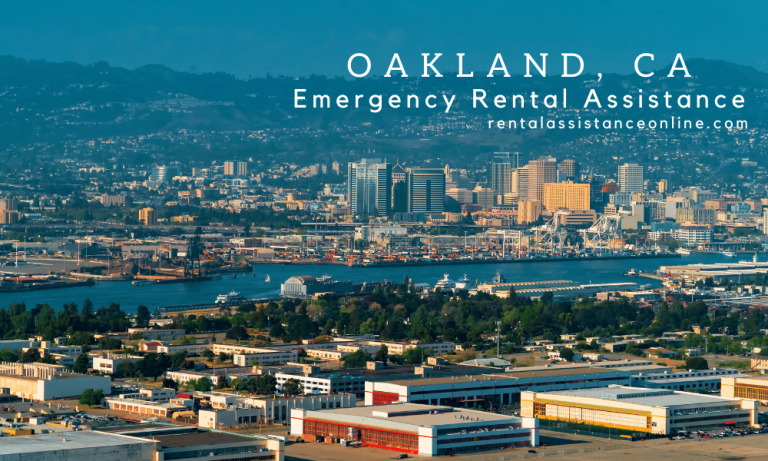
Here’s some helpful info: To comply with State of California statute AB832, the City of Oakland is now accepting landlord inquiries to determine whether or not their tenants have filed for emergency rental assistance. Requests for information from landlords can be directed to HCDinfo@oaklandca.gov by completing and submitting the form below. Renters who want a copy of their rental agreement must provide the following information: their full name, complete address, phone number, and email address, as well as the tenant’s unique application ID number (if they have one).

Oakland, CA emergency rental assistance program

The federal government earmarked funds for rental assistance in the event of an emergency. The Emergency Rental Assistance Program (ERAP) – Round 1 of high inflation’s Emergency Rental Assistance Program (ERAP) is now open. Oakland received direct support for $12.8 million. This authorization allowed funds to be distributed directly to jurisdictions with populations of more than 200,000 people.

Direct financing of $12.8 million has been awarded to the Keep Oakland Housed organization (KOH). With a specific emphasis on housing stability and homelessness prevention, the goal of this program is to help Oakland’s most vulnerable inhabitants live more secure lives. In addition to ERAP-Round 1 grants, CDBG-CV funds are being used to promote outreach, housing stability, and related legal services in the community.

Oakland will be able to expand its support for KOH initiatives even further following the receipt of an additional $19.6 million from ERAP-Round 2 and an additional $12 million from the California State Legislature.

By the ERAP1, ERAP2, and SRA2 packages, a new Emergency Redevelopment Authority Plan (ERAP) will be implemented to keep Oakland dwellings in place until September 30, 2022.

Oakland, CA emergency rental assistance program

ERAP for Landlords

Property owners requesting assistance with rent arrears should expect to spend around 25 minutes filling out the following form, depending on the number of tenants asking for assistance. All of the following documents are required: a rental agreement, a W-9, tenant contact information, and proof of rent payments.

All tenants for whom a property owner is requesting financial assistance are required to complete the “Tenant Information” and “Rent/Lease Information” parts of the financial assistance application. ERAP Providers determine if your renters qualify for assistance with unpaid rentals under the United States Treasury Guidelines. If your tenants do not qualify under these guidelines, you will not be eligible for assistance (s).

Additional Resources

Rental Assistance Los Angeles

0

Rental Assistance Los Angeles

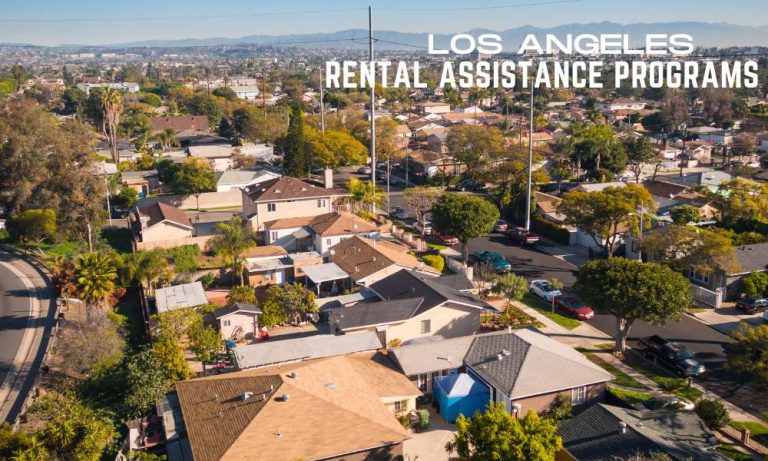
Los Angeles has been struggling for years to provide affordable housing to its low- and middle-income residents. The pandemic has made it even harder for many residents to keep up with their rent payments, putting them at risk of eviction. However, several government, state, and local rental assistance programs are available to help those in need. In this article, we will highlight these emergency rental assistance programs and resources to alleviate homelessness in Los Angeles. We will also include qualifications and application information.

Demand for Affordable Housing Rising

rental assistance los angelesLos Angeles has long been considered one of the least affordable places in the United States. With a population of nearly 4 million, the city’s growth has created a great demand for affordable housing. Unfortunately, the supply of affordable housing has not kept pace with the city’s population growth, leading to a housing crisis. Also, the COVID-19 pandemic has put more economic pressure on the service industry, which makes it harder for many people to pay their rent.

Rental Assistance Los Angeles-Find Help Now!

Fortunately, several emergency rental assistance programs are available to help those in need. These programs are designed to provide financial assistance to residents who are struggling to make rent payments due to COVID-19 or other economic hardships. Below are the programs available in Los Angeles.

  1. The Emergency Rental Assistance Program (ERAP) – ERAP is a program designed to provide financial assistance to low-income renters who have been impacted by COVID-19. Applicants must have a household income that is at or below 50% of the area median income (AMI) to qualify. Eligible applicants may receive up to 12 months of rental assistance, including back rent and utilities.
  2. COVID-19 Tenant Relief Act- The COVID-19 Tenant Relief Act is a state-wide program that provides financial assistance to renters who have been impacted by COVID-19. The program protects against eviction for non-payment of rent due to COVID-19-related financial hardship. Eligible applicants may receive up to 100% of unpaid rent from April 1, 2020, through March 31, 2021.
  3. Section 8 Housing Choice Voucher Program – The Section 8 Housing Choice Voucher Program is a federal program that provides financial assistance to low-income families to help them afford decent, safe, and sanitary housing in the private market. Eligible applicants must have a household income at or below 50% of the area median income (AMI) to qualify.
  4. LA-HOP –  LA-HOP is a program designed to help individuals experiencing homelessness in the City of Los Angeles. The program connects homeless individuals with services and resources, including emergency rental assistance programs.

Government Rental Assistance Programs in Los Angeles

In addition to the programs listed above, many government programs help people pay their rent in Los Angeles. These programs are designed to help low-income families and individuals access affordable housing. Los Angeles financial assistance for families struggling with rent

Low-Income Home Energy Assistance Program (LIHEAP) – LIHEAP is a federal program that provides financial assistance to low-income families and individuals to help them pay for home energy costs. Eligible applicants must have a household income at or below 60% of the area median income (AMI).

Housing Choice Voucher Program – The Housing Choice Voucher Program, also known as Section 8, is a federal program that provides rental assistance to low-income families and individuals. The program offers vouchers that can be used to pay for a portion of the rent in privately owned housing. Eligible applicants must have a household income at or below 50% of the area median income (AMI) to qualify.

Public Housing Program – The Public Housing Program is a federal program that provides low-income families and individuals with affordable housing. Eligible applicants must have a household income at or below 80% of the area median income (AMI) to qualify.

Housing Authority of the City of Los Angeles – The Housing Authority of the City of Los Angeles (HACLA) is a public agency that provides affordable housing to low-income families and individuals. The agency manages several rental assistance programs, including the Housing Choice Voucher Program and the Public Housing Program.

Qualifications and Application Information

How to apply for rental assistance in Los AngelesEach rental assistance program has its own set of qualifications and application information. Before applying, it is essential to check the program’s website for specific requirements.
Here are some general eligibility requirements to qualify for housing or rental assistance in the City of Los Angeles:

  1. Income: Most housing and rental assistance programs in Los Angeles have income limits. Generally, households with incomes at or below 50% or 80% of the area median income (AMI) are eligible for assistance, depending on the program.
  2. Residency: Many programs require applicants to be residents of the City of Los Angeles or have a verified local connection to the city.
  3. Age: Some programs may have age restrictions. For example, some senior housing programs may require applicants to be 62 years or older.
  4. Disability Status: Some programs may prioritize individuals with disabilities or offer specialized housing options for individuals with disabilities.
  5. Immigration Status: Some programs may require applicants to be legal U.S. residents.
  6. Rental History: Some rental assistance programs may require that applicants have a history of paying rent on time or have no recent evictions.

In conclusion, the Los Angeles area has long struggled to provide affordable housing to its low- to middle-income residents. The COVID-19 pandemic has made it even harder for many residents to keep up with their rent payments, putting them at risk of eviction.

However, several government, state, and local rental assistance programs are available to help those in need. By checking the program’s website and meeting the qualifications, residents can access the assistance they need to keep a roof over their heads.

Emergency Rental Assistance Program in Fremont, CA

0

Emergency Rental Assistance Program in Fremont, CA

Avoid Eviction, Apply Online Now!

FremontBy the City of Fremont’s Keep Fremont Housed program, unpaid rent and utilities can be reimbursed for some time stretching back as far as April 1, 2020, the date of the federal COVID-19 emergency declaration. Applicants may apply for rental assistance, utility assistance, or a combination of the two. Both landlords and tenants are urged to apply.


Understanding Keep Fremont Housed

Due to a loss of employment or income caused by COVID-19, the City of Fremont’s Keep Fremont Housed Program, sponsored by Treasury Department stimulus monies, provides rent and/or utility assistance to qualifying low-to-moderate-income households. To help those who are in danger of becoming homeless or experiencing housing instability, several subsidies are available. Landlords and tenants alike are encouraged to fill out an application.

It will be possible to pay back rent and advance rent directly to the landlord starting on April 1, 2020, subject to eligibility and funds availability. The maximum term for the program will be 12 months from the date of the first payment.

First billing cycle after April 1, 2020, the program can repay utility bills that have not been paid within 30 days.

The Keep Fremont Housed fund has a total of $7.1 million, with at least 90% of the money going directly to help the homeless.

Am I Eligible?

Am I Eligible

Applicants will not be asked about their nationality or have to present proof of their status to apply.

Candidates seeking rental assistance must meet all of the following requirements: they must pay rent on a residential dwelling/room or pay space rent on a mobile home.

Residents of Fremont are eligible for government assistance.

At or below the median household income in the area (AMI).

The COVID-19 outbreak has directly or indirectly resulted in a decrease in household income, significant costs, or severe financial hardship for one or more members of the household.

One or more members of a family may exhibit a risk of homelessness or housing instability.

If you’re a landlord and have renters who are late on their rent and require financial assistance to compensate for this loss of income, apply for the CA COVID-19 Rent Relief program:

Your renters are eligible for government income assistance (the state will calculate this when they apply).

Regardless matter how much money you get in compensation, the renter’s due rent must be paid in full at all times. Those in need of financial assistance can apply until April 1, 2020.

Your renter/s must check their eligibility and sign the application before they can rent from you. After you submit your application, they will be contacted and asked to give the relevant information.

What if I don’t live in Fremont?

Residents of Oakland can apply by going to the city’s website at this link.

There is an application process here for all Alamedans who live outside of Berkeley.

The website of the California Department of Housing and Community Development is a wonderful place to start.

Alameda County’s Area Median Income (AMI) Limits

A person’s annual household gross income (before taxes) must fall within a particular range to be eligible for the program. A two-person household in Fremont must earn no more than $87,700 per year at 80 percent AMI before taxes to be eligible for the program.

Documents Needed

Documents Needed

There is no “Save” option available in the online application. Before submitting your application, double-check that you have all of your supporting documentation ready to go. Please check “How Do I Apply for Keep Fremont Housed?” for information on how to upload documentation to apply to Keep Fremont Housed.

To download a printable checklist of the documents you’ll need for your application, select your preferred language from the drop-down menu below:

  • Valid photo identification (e.g., a valid driver’s license, a valid state identity card, a valid passport, etc.).
  • Demonstrate the need for rental help and/or utility assistance. This can be severe financial obligations and debt, a job loss, or a loss of income that is directly related to COVID-19.

Select one of the options below to submit your application:

  • After April 1, 2020, an employer must issue a layoff letter or a letter confirming reduced income to employees.
  • Unemployment Insurance letter from the state or the federal government
  • Paystubs reflect a reduction in earnings. Include the most recent pay stub proving the loss of income, as well as the last paycheck stub demonstrating the loss of income.
  • For those who are self-employed, contract workers, or gig workers who have experienced a decrease in income as a result of COVID-19, you must produce proof of income from the period before the decrease in income as well as the most recent documentation of revenue. For example, gig workers can submit information on their monthly ridership and earnings.
  • Any eviction notice served on a tenant as a result of nonpayment of rent under COVID-19
  • COVID-19 incurred a significant amount of money in expenditures. Please send in your receipts as soon as possible.

Documentation of gross 2020 household income OR documentation of gross income for the previous 60 days from the date of application submission is required for all household members. For everyone who lives in your home, please give the following information to demonstrate annual household income OR current household income as follows:

Household tax returns

  • Household tax returns for the year 2020
  • Paystubs
  • Disablement Insurance statements or a letter from a government body are both acceptable options.
  • W-2 or other pay statements, as well as social security statements
  • Bank statements proving a consistent source of income

Please supply the first billing statement(s) after April 1, 2020, AND the most recent billing statement(s) if you have any outstanding utility bills (water, gas/electric, and rubbish) (s).

Landlords are required to provide the following: The Applicant has a copy of the lease in his possession. If there isn’t a lease available, please submit one of the options listed below: utility bills in the applicant’s name, bank statements indicating payments to the landlord, or check stubs showing verification of rent payment are all acceptable forms of proof.

  • Documentation from the landlord for rent that has been overdue, signed by the landlord or his or her authorized representative
  • The landlord must submit an IRS Form W-9 to the IRS. To obtain a copy from the IRS website, please click here.


Landlords Apply Here


Tenants Apply Here

Emergency Rental Assistance Program in Chula Vista

0

Emergency Rental Assistance Program in Chula Vista

Apply Now to Avoid Eviction

Over 16 million dollars in state and federal funding is available in Chula Vista to assist qualifying residents with past-due and upcoming rent, water, sewer, garbage, gas, and electric bills. These reimbursements are for renters in Chula Vista who have had a financial impact from the COVID-19 outbreak.

The Chula Vista Emergency Rental Assistance Program’s online application is available here

Please note that this application is only available to Chula Vista residents. If you are unsure whether you live in the City of Chula Vista, the City of San Diego, or another city in San Diego County (e.g., National City, Imperial Beach, Bonita, etc. ), apply here.


Landlords Apply Here

Tenants Apply Here

Emergency Rental Assistance Program in Anaheim, CA

0

Emergency Rental Assistance Program in Anaheim

Anaheim emergency rental assistance

Applications for renters and landlords are now being accepted. Due to the COVID-19 pandemic, income-qualified tenants and landlords can get 100% of the rent and utilities they owe.

It is possible to begin the application procedure by either the renter or the landlord, but both parties will need to supply relevant information in order to get the financing.

As long as funding is available, we will process submissions on a rolling basis.

Do you know if you’ve already applied? Here, you may see the status of your application.

Get in touch with us! Call (714) 765-4300 ext. 4890 for assistance.

About Landlords

As a result of the pandemic’s economic impact and California’s eviction relief law, Anaheim is accepting landlord applications for financial help to offset past-due rent and utility charges.

From April 2020 to September 2021, Anaheim landlords with impacted homes can apply for a state payment paying 100% of unpaid rent.

Tenants who have not paid their rent in a timely manner are also eligible to apply.

Application Process

  • Landlords can apply online by going to this link.
  • All candidates will be thoroughly assessed for eligibility, and basic paperwork will be required.
  • Tenants who are represented by a landlord in a landlord’s application will be contacted and required to provide basic documentation.

Who is eligible?

Low-income Anaheim residents and those who have lost jobs or work hours as a result of the coronavirus’s economic or health effects are eligible for rent assistance.

What if I applied during the March 2021 application period and received 80% of my rent back? How can I obtain the additional aid offered by Governor Newsom?
If you have previously applied with Anaheim during previous phases of our rental aid program, you do not need to reapply.

We are still reviewing submissions from the previous round and will notify tenants and landlords after their application has been reviewed.

Landlords who have previously sought for assistance to cover up to 80% of unpaid rent do not need to reapply to be considered for the additional 20%. (adding up to 100 percent promised in new state law).

We are working with previous grantees to ensure landlords receive full rent assistance. When the additional 20% payment is due, you and your tenant will be notified in writing.

Landlords Apply Here

Tenants Apply Here

Already Applied? Check Status!