Home Blog Page 15

Madison County – Emergency Rental Assistance Program (ERAP)

0

Our Call Center is open during the following hours:

Monday through Friday, 8:00 a.m. to 4:00 p.m. Central Standard Time

Renters:

Have you had a drop in household income, suffered significant bills, or faced other financial difficulties as a direct or indirect effect of the coronavirus pandemic? If this is the case, please explain your scenario. If you become behind on your rent and/or utilities, you could be evicted or have your utilities turned off.

Landlords:

Are your tenants late on their rent?

There may be someone who can help you if you answered “yes” to any of the questions above. The US Treasury has given the County $12,376,572 for Emergency Rental Assistance (TERA1) through the Consolidated Appropriations Act, 2021 (CAA) and $9,793,002 for Emergency Rental Assistance (TERA2) through the American Rescue Plan Act of 2021 (ARPA). These funds will help low-income COVID-affected households pay for rent, utilities, and other eligible assistance. TERA1 and TERA2 have slightly different eligibility requirements. For example, TERA2 allows for assistance related to financial hardship during the pandemic rather than just because of the pandemic, which is what TERA1 only allows. Both programs still have funds available, and there is a chance that both programs could get more money through the US Treasury reallocation effort. There are many factors that will help the County decide which program to use, such as how soon it is, whether there are enough funds, how many months of help are needed, and how well someone explains their financial hardship.

The county is still taking online applications and has a phone center to help new and existing applicants. Renters, as well as landlords who act on their behalf, can apply for help. The renter must show proof of eligibility and sign the application. For a home to be eligible, certain rules must be met. Not all homes will be able to get help.

Those who qualify for assistance with rent and utility bills

  • From March 13, 2020, to the present, there is a rental debt.
  • When will I be allowed to move in there permanently?
  • Including utility and energy bills that have not yet been paid (electricity, gas, water, and sewer), trash collection, and energy costs such as LP gas, as well as any outstanding utility and energy bills

TERA1 allows you to receive assistance for a maximum of 15 months. TERA2 provides assistance for a period of up to 18 months. If you do receive rental assistance in the future, it will not be for more than three months at a time. Applicants must submit a new application for assistance every three months. They will only be assisted if they meet the qualifications and there are finances available to assist them.

The Renter Eligibility Requirements

  • You must live in Mobile County, Alabama, and be obligated to pay rent on a residential housing unit there. There are unincorporated areas within Mobile County, in addition to all of the municipalities that make up the county.
  • When (i.e., March 13, 2020 and onward) or as a result of the coronavirus pandemic (conditions change depending on whether TERA1 or TERA2 is employed), one or more members of the family are experiencing financial difficulties.
    • You might be qualified for unemployment benefits, or you might be able to get a job.
    • Have you seen a drop in your family’s income?
    • Significant financial responsibilities have been incurred,
    • Other financial problems have arisen.
  • An eviction notice and/or a notice of past-due utility or rent payments can be used to warn that a household is in danger of becoming homeless or experiencing housing instability. Other evidence of risk includes being substantially rent-burdened (having housing expenditures equal to or in excess of 50 percent of income) or possessing other persuasive evidence (in the opinion of the County) that indicates a high level of risk.
  • In order to be eligible, the applicant’s household income must be equal to or less than the HUD’s 80 percent AMI.

Requirements for Income

Based on the number of people in your household (including yourself) and the size of your family, your household income for 2020, or your estimated household income for 2021, must be at or below the amount shown in the chart.

80% Income Threshold Requirements
Number of Persons in Household 1 2 3 4 5 6 7 8
Annual Household
Income
$32,700 $37,400 $42,050 $46,700 $50,450 $54,200 $57,950 $61,650

You should keep in mind that both the renter and the landlord, if the landlord is applying on the tenant’s behalf, will be required to register an account on the website, complete and submit an application. When you register for a Mobile County government account at https://www.mobilecountyal.gov/grants/rental-and-utility-assistance/, you will receive an email with a link to the rental and utility aid application.

What You Should Expect:

Application for Tenant

  • Households who apply directly might expect the following benefits:
    • You will be required to submit photocopies of a number of different papers.
    • To register with the system, your landlord will be needed to furnish us with the following information:
      • Alternatively, you could notify your landlord that you are seeking aid and that they would be asked to sign the application; or
      • It is possible to have your landlord complete the LANDLORD application on your behalf; however, you will still need to provide additional documentation to demonstrate your income and COVID-related financial hardship.

Application for a Landlord

  • To landlords who submit rental applications on behalf of tenants:
    • To be eligible for a TENANT application, the tenant must complete and submit it, along with supporting paperwork demonstrating their income and financial hardship caused by COVID.

Payments

  • All payments will be sent immediately to the landlord and/or utility provider, or directly to the household if all other alternatives have been exhausted before sending the payment.
  • All contributions must be used to pay the tenant’s rental and utility bills, as well as any other housing-related expenses (as may be allowed by Treasury).
  • During the time period covered by any TERA payment, the landlord may not evict a tenant for nonpayment of rent during that time period (including months covered by any future rent payments).
  • Beyond the term covered by any TERA payment, the landlord is encouraged (but not required) to consider giving an extended period of time (for example, 30 to 90 days) for non-eviction.”

Prioritization

Households with very low income (less than 50 percent of AMI) and/or households with one or more adults who had been unemployed for the previous 90 days were given precedence in applications received within the first 75 days of the program’s implementation (i.e., until May 14, 2021).

On May 15, 2021, subject to funds availability, an application examination will be conducted in the order of filing, with priority given to those cases that entail rent and/or rent and utility payments, rather than utility payments alone. Additionally, applicants who qualify for the Eviction Prevention Program and those seeking additional funds to supplement prior assistance to keep their homes will be given priority for TERA2 financing (see also Eviction Prevention Program – COVID for additional information).

The United States Treasury Department

The Mobile County TERA Program was designed in compliance with the US Treasury’s Overview and Requirements.

Tuscaloosa County – Emergency Rental Assistance Program (ERAP)

0

Tuscaloosa Rental Assistance: How to Get Help Paying Rent

Tuscaloosa County, Alabama, like many areas across the country, has been impacted by rent increases due to inflation and the COVID-19 pandemic. For low- to middle-income families struggling to make ends meet, rental assistance programs can provide much-needed financial assistance. In this article, we will discuss the various rental assistance programs available in Alabama, especially Tuscaloosa County, the eligibility criteria for each program, and how to apply for financial assistance.

Tuscaloosa rental assistanceTypes of Rental Assistance Programs in Tuscaloosa County

Tuscaloosa County has several programs to help people pay their rent. These include emergency financial help, emergency rental help, help with utility assistance, and housing vouchers. Emergency financial assistance is meant to help people pay for unexpected costs like utility bills, medical bills, or repairs that need to be done right away. Emergency rental assistance gives money to people who qualify to help them pay their rent and other related costs. Utility assistance is meant to help low-income families pay their utility bills, and housing vouchers help eligible people pay their rent by giving them money.

Eligibility Criteria for Rental Assistance Programs

To be eligible for rental assistance programs in Tuscaloosa County, applicants must meet income qualifications, which vary depending on the specific program. For example, the Northport Housing Authority has programs to help renters who make less than 80% of the median income for the area. Also, some rental assistance programs may have other eligibility requirements, such as having to live in the area or follow housing codes.

How to Apply for Rental Assistance Programs in Tuscaloosa County

To apply for rental assistance programs in Tuscaloosa County, eligible applicants should contact the appropriate agency or organization directly. For example, in Northport, the Northport Housing Authority helps eligible people pay their rent, while in Mobile County, the Mobile County Community Action Agency helps eligible people pay their rent. It’s important to remember that rental assistance programs may have limited funds, so it’s important to apply as soon as possible.

Rental assistance in Tuscaloosa countyOther rental assistance programs in Alabama
In Alabama, there are more rental assistance programs than just the ones in Tuscaloosa County. For example, the Emergency Rental Assistance Program and the Community Services Block Grant Program can help people pay their rent. The Emergency Rental Assistance Program gives eligible applicants money to help pay their rent, utilities, and other related costs. The Community Services Block Grant Program gives eligible applicants money for a wide range of needs, including rental assistance.

Tuscaloosa Housing Authority

City of Tuscaloosa HOME Program

AlabamaLegalHelp.org

2-1-1 | United Way of West Alabama

Conclusion

Rent increases due to inflation and the COVID-19 pandemic have made it challenging for low to middle-income families in Tuscaloosa County, Alabama, to afford rent. However, rental assistance programs are available to provide much-needed financial support. By understanding the eligibility criteria and application process for rental assistance programs in Tuscaloosa County and Alabama, eligible applicants can access emergency funds and financial assistance to help cover the cost of rent and related expenses.

Alabama Rental Assistance: A Lifeline for Low to Mid-Income Households

1

Alabama – Emergency Rental Assistance Program (ERAP)

Areas Covered

Baldwin County, Jefferson County, Madison County, Mobile County, Montgomery County, Tuscaloosa County, Birmingham, and Huntsville City

The Individual and Households Program (HP) provides financial assistance or direct services to individuals and households who have essential expenses and significant needs and are unable to meet these needs through other means. Up to $33,300 is available in financial aid.

The Birmingham Emergency Rental Assistance Program

The City of Birmingham offers an Emergency Rental Assistance Program for residents who are facing challenges in paying their rent or utilities due to COVID-19. This program is also open to landlords. For further details or to begin the online application process, please visit the provided website.

For assistance with an online application, please call 205-778-2091. Any questions can be emailed to rentalassistance@specialkindofcaring.org. This applies only to first-time applicants.

Residents should be aware that several documents are necessary to complete the application process online. The application will not be considered complete until all required information has been provided.

Please see the list below of the documents that are required online and in person.

Renters must provide the following:

  • Signed lease
  • Driver’s license or another photo ID
  • Proof of Income (2021 taxes, paystub, unemployment award letter or bank statement.)
  • Past due utility bill (Power, gas, water)
  • Rent statement or ledger
  • Eviction notice
  • Valid email address
  • Documents showing the household has experienced direct or indirect negative economic impact due to COVID-19 or any other financial hardship
  • Landlord’s W-9, address of the property for a rental apartment, and contact information
  • Landlords should provide their:
  • W-9
  • Property address for rental apartment
  • Contact information

Please note: This program is ONLY for renters who live within the city limits of Birmingham.

Eligibility

Please note that income is just one factor that determines eligibility for this program. Additional qualifications and income levels can be found in the “Do I Qualify?” section, located further down on this page. An FAQ about the program is also provided.

Both landlords and tenants have the option to utilize the online portal to establish an account and submit their ERA application. The online portal is scheduled to close on May 1, 2023.

Upon initial visit to the online portal, the applicant will be required to:

  • To access the online application, the applicant must first click the “Register” button on the link to create a profile.
  • During the registration process, the applicant is required to provide their email address and establish a password.
  • When creating a password, the password must have a minimum of eight characters, which should include at least one capital letter, one number, and one symbol.
  • Applicants must complete the registration process before they can access the portal and begin the application process.
  • Applicants can click the “Sign in” button on the portal and continue.
  • Please make sure to remember or write down your case identification number.

If applicants do not have access to the Internet and cannot complete an online application, the applicant will be referred to a case worker who can help them. For additional questions on the program, please send emails to rentalassistance@specialkindofcaring.org or call 1-205-778-2091.

The Birmingham Emergency Rental Assistance Program can help renters with the following costs that go back as far as March 13, 2020:

  • Past due, current, and up to three months of expected rent costs
  • Past due, current, or up to three months of expected utility and home energy expenses

Homeowners with past-due mortgages are NOT eligible for this program

This program is NOT available for Birmingham homeowners who live in a home with a past due mortgage or delinquent utility expenses connected to the pandemic.

When applying for the Alabama Emergency Rental Assistance Program, participants seeking rental help are required to upload several, critical documents to the online portal, including their:

  • Signed lease
  • Driver’s license or another government-issued photo ID
  • An eviction notice or a letter from landlord saying they are behind in rent
  • Proof of income for each adult household member (tax documents, paystubs, unemployment award letter, savings and checking account statements, child support income documentation, if applicable) OR a determination letter from a government agency verifying a household member is at or below 80% of the area median income.

If the applicant has completed his or her household’s federal income taxes for 2021, they or will need to provide one of the following:

  • Filed 2021 IRS Form 1040
  • Filed 2021 IRS Form 1040-SR

If the applicant has not yet completed his or her federal income taxes for 2021 OR they are not required to file a federal income tax return for 2021, the applicant will need to provide all of the applicable income documentation under one of these two categories:

Acceptable annual income documentation:

  • 2021 IRS Form W2
  • Current Social Security benefits letter or 2020 Form 1099-SA (including benefits paid to minors)
  • 2021 Form 1099-R
  • 2021 IRS Form 1099-MISC for contractor income

Other acceptable income documentation:

  • Check stubs from the applicant’s employer for the previous 30 days
  • Current unemployment benefits letter including gross benefit amount
  • Current signed letter from applicant’s employer (on company letterhead) verifying gross wages (pay rate, hours/week, pay date)
  • Current pension/retirement benefit letter (if applicable)
  • Current annuity payment letter
  • Current interest statement 1099- INT
  • Current dividend statement 1099- DIV
  • Certification of income form signed (for self-employed or cash income)
  • Zero income form signed
  • Some forms are needed for the application process. Not all forms are listed and not all may apply.
  • Participants seeking help with utility bills must upload:
  • A utility bill or bills showing a disconnected status

LANDLORDS: Is one or more of your tenants behind on their rent payments?

TENANTS: Are you unable to make your rent or electricity bill payments?

The state of Alabama and Jefferson County in particular is ready to assist you. COVID-19 has impacted residents from around the state, including the capital city of Sacramento. We provide emergency assistance to tenants in Alabama who are having difficulty meeting their rent and utility payments (including past due rent and utilities). It was included in the Consolidated Appropriations Act of 2021, which provides $25 billion for pandemic-response emergency rental assistance across the country. The program is administered by the Treasury Department of the United States.

Except for Baldwin County, Jefferson County, Madison County, Mobile County, Montgomery County, Tuscaloosa County, Birmingham City, and Huntsville City, ERA Alabama assists all counties and jurisdictions in Alabama, except for Baldwin County, Jefferson County, Madison County, Mobile County, Montgomery County, Tuscaloosa County, Birmingham City, and Huntsville City. For information on how to obtain emergency rental assistance in those areas, please see our FAQs section.

Applying for Jefferson County Rental Assistance Programs

Except for Baldwin County, Jefferson County, Madison County, Mobile County, Montgomery County, Tuscaloosa County, Birmingham City, and Huntsville City, ERA Alabama assists all counties and jurisdictions in Alabama, except for Baldwin County, Jefferson County, Madison County, Mobile County, Montgomery County, Tuscaloosa County, Birmingham City, and Huntsville City. For information on how to obtain emergency rental assistance in those areas, please see our rental assistance programs section.

Fill out an online application or call (833) 620-2434 (toll-free) to speak with a program representative about applying over the phone. You may also apply in person. Support is available in many different languages through the toll-free number in Jefferson County and the State of Alabama.

Claiming benefits

Tenants have the right to file a claim for overdue or future emergency rental assistance immediately. This helps them access available rental assistance programs. After confirming that your landlord is willing to participate, you can either apply directly and your landlord will be contacted for additional information, or you can cooperate with your Landlord to have them apply on your behalf using the LANDLORD application.

While it is unlikely that your landlord will agree to participate in the Program, you as the Tenant may still be eligible for rental and utility assistance. To apply, complete the online application or call the toll-free number listed above.

When a Jefferson County renter does not have an email address, the Landlord can print the application form, obtain a physical signature, and transmit or upload the application and associated income documents on the renter’s behalf if the tenant does not have an email address. If the Program does not collect a tenant’s information or documentation, a representative will contact them to assist them in obtaining the necessary information and documentation to complete the Tenant Profile.

Users who have already signed up

Do you have any questions, Land Lord?

Do you have any questions as a renter?

Washington County – Emergency Rental Assistance Program (ERAP)

0

The rental aid program in Washington County has come to an end.

Housing-Affordable-Housing-Programs

COVID-19 Rent Assistance and Eviction Protections Programs: By 2020, tenants and landlords in Washington County will be able to seek help with past due rent through two programs: the US Treasury’s Emergency Rental Assistance program and the state-supported Landlord Compensation Fund (which is financed by the county) (LCF applications closed in June 2021). Please see our COVID-19 Updates and Programs page for additional information on eviction protections, or read this overview document (in English and Spanish) about tenant rights, rent assistance, and going to court.

Rental Assistance Programs

The Washington County Department of Housing Services (DHS) offers a variety of housing alternatives to qualified applicants, including:

Section 8 vouchers are classified as Housing Choice Vouchers (Section 8) and Project-Based Vouchers (Project-Based Vouchers).

Housing Assistance for the Poor

Mississippi Rental Assistance Programs: How to Get Help Paying Rent in 2025

5

As housing affordability continues to challenge families across the United States, Mississippi renters are feeling the strain more than ever. With wages lagging behind rental costs and inflation pushing everyday expenses higher, more tenants are at risk of eviction or long-term housing instability. Whether due to job loss, illness, or recovering from the financial effects of the pandemic, thousands of Mississippi residents are searching for ways to keep a roof over their heads.

Thankfully, there are several rental assistance programs available at the state, county, and nonprofit levels. This comprehensive 2025 guide explains the latest rental aid programs, eligibility requirements, how to apply, and trusted local organizations that can help.


Why Rental Assistance Is Still Needed in Mississippi

Why Rental Assistance Is Still Needed in Mississippi

Rental assistance is more than a temporary solution—it’s a stabilizing force for families, communities, and local economies. The need remains high due to economic inequality and a mismatch between housing costs and household incomes.

Housing and Income Trends

Several statewide economic trends are driving the continued need for rental support:

  • Mississippi ranks among the bottom five U.S. states in terms of median household income, with many families earning under $50,000 per year, according to the U.S. Census Bureau.

  • In contrast, median rental prices have increased by over 20% in parts of the state since 2020.

  • COVID-19 eviction moratoriums and enhanced unemployment benefits have expired, removing vital safety nets for low-income renters.

These combined factors make many Mississippians vulnerable to housing insecurity.

Rent-Burdened Households

A household is considered “rent-burdened” when more than 30% of its income goes toward rent. In Mississippi:

  • Over 41% of renter households fall into this category, according to 2023 U.S. Census Bureau data.

  • Urban centers like Jackson, Gulfport, and Hattiesburg face some of the highest rates of rent burden.

  • Rural counties often lack affordable housing options and resources for eviction prevention, compounding the problem in areas with limited public infrastructure.


Key Rental Assistance Programs in Mississippi

There are several active or recent rental assistance programs Mississippians can access, with support available at both the state and community levels.

Mississippi Emergency Rental Assistance Program (ERAP)

Managed by the Mississippi Home Corporation (MHC), the ERAP program provides comprehensive financial support for struggling renters.

  • Benefits: Up to 15 months of rent and utility assistance (including back rent)

  • Eligibility: Applicants must show financial hardship (e.g., loss of income, increased expenses) and be at risk of homelessness or housing instability

  • Priority: Given to households earning below 50% of the Area Median Income (AMI) and those with recent eviction filings

  • Application: Submit online through the MS-ERAP portal

Mississippi Home Corporation’s RAMP (Rental Assistance for Mississippians Program)

Although now closed, RAMP played a vital role during the pandemic.

  • Impact: Helped over 100,000 households and distributed more than $250 million in rental and utility assistance between 2021–2023

  • Takeaway: Households that applied early, had complete documentation, and followed up saw the fastest results—a lesson that applies to current programs as well

Local and Nonprofit Assistance Options

In addition to state-run initiatives, nonprofits offer direct aid and wraparound support services:

  • Catholic Charities of Mississippi: Offers emergency financial assistance for rent, especially for families and seniors (Website)

  • Mississippi United to End Homelessness (MUTEH): Provides rehousing services, rental subsidies, and eviction prevention

  • The Salvation Army: Mississippi chapters provide temporary rental help, shelter, and utility support for individuals and families in crisis


County-Level Rental Help Across Mississippi

County-Level Rental Help Across Mississippi

Many counties also manage their programs or partnerships with local agencies. Here’s a breakdown of available support by region:

Hinds County / Jackson Area

  • Urban League of Greater Jackson: Offers emergency rent assistance, especially for Black and minority households

  • Jackson Housing Authority & City Services: Provide access to vouchers and referrals to nonprofits

  • 2-1-1 Referral Line: Connects residents with emergency assistance and legal aid services

Gulf Coast (Harrison, Jackson, Hancock Counties)

Northern Mississippi (Desoto, Lafayette, Lee Counties)


How to Apply for Rental Assistance in Mississippi

Understanding the application process is crucial to receiving aid promptly.

Required Documents

Before applying, gather the following:

  • Government-issued ID (driver’s license, state ID)

  • Proof of income (pay stubs, unemployment letter, or tax return)

  • Lease agreement or proof of rental arrangement

  • Late rent notice or notice of eviction (if applicable)

  • Utility bills (if also seeking utility assistance)

Application Process

Most applications are processed online:

  • Visit www.ms-ramp.com to access the Mississippi ERAP application portal

  • Assistance is available through community partners listed on the website

  • Language support and disability access services are provided in many counties

What Happens After You Apply?

Once you submit your application:

  • Processing typically takes 2–4 weeks

  • Funds are disbursed directly to landlords and utility providers

  • Additional documentation or verification may be requested, so stay alert for follow-ups via email or phone


Key Research and Data

Key Research and Data

To understand the depth of Mississippi’s rental crisis, consider these recent findings:

Data Point Source
Over 100,000 households were helped by Mississippi’s ERAP (2021–2023) Mississippi Home Corporation
Rent assistance reduced eviction filings by 35% in key counties Urban Institute
Black and Hispanic renters in Mississippi face twice the eviction risk compared to white renters Center on Budget and Policy Priorities

These stats reinforce the ongoing need for accessible, equitable rental support programs.


Quotes from Experts

“Rental aid in Mississippi is a lifeline — especially in rural areas where resources are scarce.”
Scott Spivey, Executive Director, Mississippi Home Corporation

“If you’re behind on rent, don’t wait for an eviction notice. There are programs ready to help, but you must act early.”
Kimberly Jones, MUTEH Housing Navigator


Real-Life Case Studies

Sharing real stories helps show what’s possible when assistance is accessed in time.

Jackson Family Avoids Homelessness Through RAMP

After the father of the family lost his job during the pandemic, the household faced eviction. By applying to RAMP, they received 12 months of back rent and utility support, allowing them to stay in their home while the father secured new employment.

Gulfport Senior Gets Back on Track with Salvation Army Help

A retired senior battling health issues and a fixed income faced losing her apartment. Thanks to emergency funds from the Salvation Army, she received utility and rent support during recovery—and avoided homelessness.


Frequently Asked Questions (FAQs)

Is rental assistance in Mississippi still available in 2025?
Yes. While RAMP is closed, ERAP and various local aid programs are still active and taking applications.

What if I’ve already been evicted?
Programs like MUTEH and local nonprofits offer rehousing assistance and transitional support for those already displaced.

Can I get help with past-due utility bills too?
Yes. Many rental assistance programs also cover utility arrears for eligible applicants.

What if my landlord refuses to participate?
Some programs can offer direct-to-tenant assistance. Contact your program administrator for options.

Can undocumented residents apply for rental help?
Some nonprofit programs offer support regardless of immigration status. Check with local agencies for guidance.


Helpful Resources and Contact Info


Next Steps: How to Get the Help You Need

Here’s what you can do today to take action:

  1. Visit www.ms-ramp.com and review the eligibility criteria for Mississippi’s rental assistance.

  2. Gather your documentation before applying to speed up the process.

  3. Contact 2-1-1 to be referred to local organizations offering emergency rental or utility aid.

  4. Apply as early as possible, especially if you’ve received an eviction notice or utility shutoff warning.

  5. Follow up regularly to ensure your application is being processed and all paperwork is complete.

Need rental help?

Help is available — reach out now and protect your home.


Apply Now

Harrison County Offers Emergency Rental Assistance

0

The Harrison County Board of Supervisors has approved a $6 million federal grant to provide emergency rental assistance to residents who have been affected by the COVID-19 pandemic. This covers the cities of: Gulfport, Biloxi, Long Beach, Saucier, Pass Christian, Lyman, and D’Iberville. The funds will be administered by the Open Doors Homeless Coalition, and will be available to households with incomes below $48,700 for a family of four or $34,100 for an individual.

To be eligible for assistance, households must have experienced financial hardship due to COVID-19, such as job loss, reduced hours, or medical expenses. They must also be current on their rent or have a payment plan in place with their landlord.

Eligible households can receive up to 12 months of rent assistance, plus an additional three months of forwarding payments, for a total of 15 months of rental support. Assistance with utilities may also be available, depending on the program guidelines.

To apply for assistance, households should contact their landlord to see if they have already started the process with the Open Doors Homeless Coalition. If not, households can call 228-604-8011 toll-free for more information.

The deadline to apply for assistance is August 15, 2023.

Eligibility Requirements

  • Household income must be below $48,700 for a family of four or $34,100 for an individual.
  • Households must have experienced financial hardship due to COVID-19.
  • Households must be current on their rent or have a payment plan in place with their landlord.

Applying for Assistance

  • Proof of income for each household member.
  • Documentation of the financial hardship caused by COVID-19.
  • A copy of the lease agreement.
  • The landlord’s signature on a few documents.

For more information about the Harrison County Emergency Rental Assistance Program, please call 228-604-8011 toll-free.

In addition to the Harrison County Emergency Rental Assistance Program, there are other resources available to help Mississippians who are struggling to pay their rent. The Rental Assistance for Mississippians Program (RAMP) is a state-funded program that provides rental assistance to households with incomes below 80% of the area median income. The deadline to apply for RAMP assistance is August 15, 2023.


South Dakota Emergency Rental Assistance: Programs, Eligibility & How to Apply

0

Across South Dakota, rising housing costs, job losses, and natural disasters have pushed many renters to the brink of eviction. Whether you live in a rural community hit by flooding or a city like Sioux Falls experiencing rapid rent hikes, the need for housing support has never been greater.

Fortunately, South Dakota emergency rental assistance programs are available to help stabilize housing, prevent homelessness, and provide temporary relief during financial hardship. From federal programs like FEMA to statewide initiatives such as SD CARES, renters in need have options—if they know where to look.

This guide outlines the major rental aid resources available in 2024, who qualifies, how to apply, and where to get help now.


Why Rental Assistance Matters in South Dakota

Housing Challenges in the State

Housing Challenges in the State

South Dakota’s rental market poses unique challenges, especially in rural counties where housing inventory is limited and support services are sparse. Meanwhile, in urban areas such as Sioux Falls and Rapid City, demand has driven up rent prices faster than wages can keep pace.

Adding to the pressure, the state has experienced a growing number of extreme weather events. The 2024 spring floods displaced hundreds of families, leaving many scrambling to find emergency housing. Combined with post-pandemic inflation and income instability, these factors have created a perfect storm of housing insecurity.

📊 U.S. Census Bureau data shows that 1 in 4 renters in South Dakota are rent-burdened, meaning they spend more than 30% of their income on rent.

Populations Most at Risk

While housing insecurity can affect anyone, certain groups are more vulnerable and often prioritized for aid:

  • Low-income workers, including those in agriculture, hospitality, and service industries

  • Families with children, who face disruption to education and safety during eviction

  • Seniors and people with disabilities, many of whom live on fixed incomes

  • Disaster-impacted households, particularly in flood-affected counties like Turner, Lincoln, and Davison


Key Emergency Rental Assistance Programs in South Dakota

Several state, federal, and local programs are available to help renters avoid eviction and stay safely housed.

SD CARES Housing Assistance Program

Originally launched during the COVID-19 pandemic, SD CARES continues to offer temporary rent and utility assistance for eligible South Dakotans facing economic hardship.

  • Services Covered: Rent arrears, forward rent, security deposits, and utility bills

  • Who Qualifies: Income-eligible renters experiencing financial hardship or at risk of housing instability

  • Apply through: www.sdhousing.org

  • Support Contact: Email: sdcares@helplinecenter.org

🏠 As of 2024, SD CARES remains open and is actively processing applications for both rural and urban applicants.

FEMA Rental Assistance (For Disaster-Affected Areas)

In response to the 2024 flooding events, FEMA has activated rental assistance in several South Dakota counties, including Davison, Lincoln, Turner, and Union.

  • Eligibility: Residents whose homes were damaged or destroyed in federally declared disaster zones

  • What It Covers: Temporary housing costs, hotel stays, and rental support for displaced renters and homeowners

  • How to Apply: www.disasterassistance.gov or call 800-621-3362

  • Tip: Apply as soon as possible after a disaster declaration to maximize benefits.

Local and Regional Agencies Offering Help

In addition to federal and statewide programs, regional organizations offer direct assistance and case management.


How to Apply for Emergency Rental Assistance in SD

How to Apply for Emergency Rental Assistance in SD

Application Process Overview

To improve your chances of approval, follow these steps:

  1. Choose the right program for your location and situation (e.g., FEMA for flood victims, SD CARES for economic hardship).

  2. Gather required documents in advance to avoid delays.

  3. Apply online or through a local partner agency like GROW SD or ICAP.

  4. Follow up with a case manager or agency representative to track your application and provide any missing information.

Common Documents Needed

Most rental aid programs require the following paperwork:

  • Government-issued ID (e.g., driver’s license or tribal ID)

  • Lease agreement or current rent invoice

  • Eviction notice or proof of overdue rent

  • Utility bills (if seeking utility assistance)

  • Proof of income (pay stubs, unemployment, SSI, or self-attestation of hardship)

Tips for a Successful Application

Applying for aid can be competitive, so use these tips to improve your odds:

  • Apply as early as possible — funding is limited and often distributed on a first-come, first-served basis.

  • Make copies (digital and physical) of all submitted documents.

  • Stay in contact with a caseworker or call 211 if you need help completing your application.

  • Document your hardship clearly and honestly, especially if you’re unemployed, medically affected, or a disaster survivor.


Research and Key Data

Here’s a snapshot of the rental landscape and program impact in South Dakota:

Metric Insight Source
1 in 4 SD renters is cost-burdened Many struggle to afford basic housing U.S. Census Bureau
FEMA has distributed over $1.2M in rental aid in 2024 Significant need after spring floods FEMA.gov
Minnehaha and Pennington counties report the highest aid requests Urban areas face growing affordability issues SD Housing Authority Data

Expert Quotes

“South Dakota renters face unique challenges in rural areas where resources are scarce. Programs like SD CARES are a crucial lifeline.”
Representative, South Dakota Housing Development Authority

“Rental assistance is about more than rent — it keeps people connected to work, school, and stability.”
Case Manager, Helpline Center


Case Studies & Real-Life Examples

Rural-Family-in-Turner-County-Finds-Relief-Post-Flood

Rural Family in Turner County Finds Relief Post-Flood

After devastating spring floods destroyed their mobile home, a Turner County family was able to access both FEMA rental assistance and SD CARES funds to secure a temporary rental and avoid homelessness. With the help of a local case manager, they transitioned into a long-term housing solution.

Single Mother in Rapid City Avoids Eviction with GROW SD Support

Facing eviction after losing a part-time job, a single mother of two received emergency rental assistance through GROW South Dakota. She also completed a budgeting class, which helped her manage expenses and prevent future crises.


Frequently Asked Questions (FAQs)

Is SD CARES still accepting applications in 2024?
Yes. As of April 2024, the SD CARES program is still active and accepting applications online at sdhousing.org.

Who qualifies for FEMA rental aid?
Renters and homeowners in FEMA-declared disaster areas who are displaced or whose homes are uninhabitable due to storms, floods, or other disasters.

Can I get help with utilities too?
Yes. Both SD CARES and regional agencies like GROW SD often include utility assistance as part of their services.

What if my landlord refuses to participate?
Some programs can issue payments directly to the tenant or work with mediation services. Contact a case manager for options.

How long does it take to receive rental assistance?
Approval and disbursement can take anywhere from 2 to 6 weeks, depending on the program and document completeness.


Helpful Contacts and Resources

Resource Contact Info
SD CARES Program www.sdhousing.org · Email: sdcares@helplinecenter.org
FEMA Disaster Assistance www.disasterassistance.gov · 📞 800-621-3362
GROW South Dakota 📞 605-432-6571 · www.growsd.org
ICAP www.interlakescap.com
Helpline Center 📞 Dial 211 · www.helplinecenter.org

Next Steps: How to Get Rent Help Today

  1. Visit sdhousing.org to apply for SD CARES rental assistance.

  2. Call 211 to speak with a case manager and locate local rental aid providers.

  3. Contact FEMA if your household was impacted by flooding or a disaster.

  4. Reach out to GROW SD or ICAP for regional support and utility help.

  5. Prepare your documents now so you’re ready to apply when opportunities arise.

Need rental help?

Help is available — South Dakota emergency rental assistance programs


Apply Now

Alaska Rental Assistance Programs in 2026: What Help Still Exists (and Where to Apply)

1

BEST FOR
Behind on rent right now
Focus on AHFC waitlist options, stabilization programs, and local partners that can triage urgent cases.
BEST FOR
Heating/utility crisis
In Alaska, heat help can be housing stability—use the Heating Assistance Program (HAP) lane.
BEST FOR
Tribal / rural regions
Regional housing authorities may move fastest where nonprofit coverage is limited.

Alaska rental assistance programs in 2026: what’s changed and what still exists

Facing rent challenges in Alaska? You’re not alone—and you’re not out of options. While the federal Emergency Rental Assistance Program (ERAP) that launched during COVID has largely wrapped up, renters can still find help in 2026 through state, local, and tribal programs that cover things like rent stabilization, utilities (especially heat), and homelessness prevention.

This updated guide breaks down what “Alaska ERAP” was, what replaced it, who qualifies today, and how to apply—whether you’re in Anchorage, Fairbanks, Juneau, or a remote village.

“Program lane”
A practical way to find help in Alaska: pick the lane you need (rent help, heat help, stabilization, legal) and apply through the agency that runs that lane.
Area Median Income (AMI)
Many Alaska rental assistance programs use AMI thresholds (often prioritizing lower-income bands first) to decide who qualifies.
HAP (Heating Assistance Program)
A State of Alaska program that can help with heating/energy bills—often a make-or-break factor for housing stability in winter.

Alaska ERAP explained: what it was and whether it’s still available in 2026

What Was Alaska ERAP?

Alaska ERAP (often referenced as Alaska Housing Rent Relief during the pandemic) was Alaska’s large-scale response to housing instability during COVID-19. It was administered through the Alaska Housing Finance Corporation (AHFC) using federal Emergency Rental Assistance funding.

Overview of the Emergency Rental Assistance Program in Alaska

To set the context, here’s what ERAP generally covered at its peak. It helped eligible households pay:

  • past-due rent (arrears)
  • current rent
  • utilities and home energy costs (including arrears)
  • limited housing stability services (like case management)

That general scope is consistent with U.S. Treasury guidance for ERA1/ERA2. If you want the bigger “how it worked” picture (in plain English), it also helps to skim a quick explainer on how federal emergency rental assistance works so you can see how Alaska’s setup fit into the national program rules.

How Much Funding Did Alaska Receive?

It’s important to be precise here because older figures are often repeated online.

Based on U.S. Treasury allocation documents:

  • ERA1 allocation for Alaska: $200,000,000 total (including Anchorage as an eligible local government allocation)
  • ERA2 allocation for Alaska: $152,000,000 total (including Anchorage)

That’s $352 million in combined ERA1 + ERA2 allocations to Alaska (separate from tribal/Alaska Native corporation allocations, which are listed under Treasury’s tribal ERAP reporting).

Who Managed It: Alaska Housing Finance Corporation (AHFC)

AHFC led statewide implementation and continues to run other rental assistance and housing stability efforts, including waitlisted rental assistance programs and homelessness-oriented stabilization work.

Is Alaska ERAP Still Available in 2026?

The short version: the original ERAP funding window has ended, and the ERA2 performance period has also ended (meaning grantees may no longer use ERA2 award funds to assist renters under that program).

However, that does not mean assistance disappeared. In 2026, Alaska renters typically access support through a mix of:

  • AHFC-administered rental assistance waitlists and housing stabilization programs
  • state utility/energy assistance (critical in Alaska)
  • local nonprofits and community action agencies
  • tribal/regional housing authorities (often the fastest path in rural areas)

Status Update on Alaska ERAP as of 2026

Here’s what’s current and verifiable:

  • U.S. Treasury confirms the ERA2 period of performance has ended and directs renters to other resources.
  • AHFC continues to offer pathways to assistance through its broader rental assistance process (typically via community waiting lists, with local requirements).
  • Dedicated ERAP-branded portals may now be closed; for example, Alaska Housing Relief states it is no longer accepting applications or appeals (as of its last public update).

One small but helpful mindset shift: in 2026, you’re usually not looking for “the Alaska ERAP portal” anymore. You’re looking for the right program lane—rent help, heat help, stabilization help, or legal help—and then applying through the agency that runs that lane.


Active Alaska rental and utility assistance programs: the “buckets” that still help in 2026

Because Alaska’s housing needs vary wildly by region (and energy costs can be as urgent as rent), the most practical approach is to think in “buckets” of help.

Before you apply, use this quick table to match your situation to the right type of program.

Need Best-Fit Program Type Who Runs It What It Can Cover
Ongoing rent help (voucher-style) Rental assistance waitlists / voucher programs AHFC / local housing offices Portion of rent paid over time (varies by program)
Heating / energy bills Heating Assistance Program (HAP) / LIHEAP-related help State of Alaska (Division of Public Assistance) Heating assistance, crisis assistance, related supports
Help in Anchorage + Mat-Su (tribal housing) Regional/tribal housing resources Cook Inlet Housing Authority (CIHA) Affordable rentals, applications, housing programs
Eviction questions / tenant rights Legal help + helplines Alaska Legal Services Corporation (ALSC) Tenant guidance, legal information, possible representation

1) AHFC Rental Assistance (Waitlist-Based)

To clarify what many renters miss: in 2026, “rental assistance” through Alaska Housing often means you apply to get on a community-specific waiting list, and each local office can have its own package requirements and submission method.

If you’re exploring AHFC options, start here:

Also worth noting: AHFC periodically opens and closes waiting lists for specific voucher-like programs (with defined open/close dates). When you’re trying to time it right, it can help to keep an eye on AHFC’s program pages and updates.

And if you’re in a situation where you need help quickly—like you’re behind right now and you’re trying to avoid a spiral—this step-by-step guide on emergency housing assistance can help you think clearly about what to do first (and what to gather before you start calling around).

2) Utility and Heating Help: Alaska Heating Assistance Program (HAP)

In Alaska, utility support can be the difference between staying housed and spiraling into crisis—especially in winter. The State of Alaska’s Heating Assistance Program (HAP) posts a new application after October 1 each year and accepts applications through state public assistance offices and other submission methods.

Start here:

If you need the bigger picture of where to find housing-related resources in Alaska, HUD’s Alaska page can point you toward directories and state-level starting points.

3) Tribal and Regional Housing Authorities

If you’re Alaska Native or live in a tribal region, your regional housing authority may be the fastest path to direct support—especially where mainstream nonprofit coverage is limited.

One key example is the Cook Inlet Housing Authority (CIHA), which provides housing services and rental property applications (Anchorage and surrounding areas). If Anchorage or Mat-Su is your home base, you may also want CIHA’s how to apply page so you know what they’ll ask for before you start.

For Bethel and the Yukon-Kuskokwim Delta, your local regional housing authority is often the correct first call. (If you’re writing about AVCP RHA specifically, make sure you’re linking to the official, current entity page for that region so renters don’t end up in the wrong place.)


Who qualifies for Alaska rental assistance in 2026?

Eligibility depends on the program, funding source, and location—but there are consistent patterns across Alaska.

Income Eligibility Limits (Often at or Below 80% AMI)

Many housing programs use Area Median Income (AMI) thresholds, commonly targeting households at or below 80% of AMI (and often prioritizing lower-income bands first).

To look up accurate AMI limits by area, use:

Proof of Hardship or Housing Instability

Most programs require a reason you’re seeking help. Before you start an application, prepare documentation such as:

  • pay stubs or benefit letters (unemployment, disability, etc.)
  • medical bills or caregiving documentation (if relevant)
  • notices related to eviction risk or past-due rent (if applicable)

Lease or Rental Agreement Requirements

Many programs require proof you have a rental obligation. Typically accepted documents include:

  • a signed lease or rental agreement
  • landlord contact information
  • utility bills (sometimes)

If you don’t have a formal lease, some programs may accept alternate documentation (like written agreements or affidavits), but rules vary by administering agency—especially between state and tribal programs.


How to apply for Alaska rental assistance and heating help

Applying is usually simpler than people expect if you do two things well: apply through the right agency and submit a complete packet.

Application Paths That Actually Work

Use this checklist to pick your best route:

  • If you’re seeking AHFC-administered rental assistance, start with AHFC’s “How to Apply” instructions and follow your community’s waiting list process.
  • If your biggest threat is utilities or heat, start with the State of Alaska Heating Assistance Program.
  • If you’re eligible for tribal/regional programs, contact your regional housing authority directly (for Anchorage/Mat-Su, CIHA is a major hub).

And if you’re stuck on the “Where do I even begin?” question, reading a few real-world renter scenarios can help you map your next move. The rental assistance Q&A section is a good place to see the kinds of questions people ask when they’re trying to sort out rent, utility bills, and urgent housing problems.

Required Documents (Typical List)

Before you click “apply,” gather these items so you don’t stall mid-process:

  • government-issued photo ID
  • lease or rental agreement (or alternative proof)
  • proof of income (W-2, pay stubs, benefit letters)
  • recent utility bills (electric, water, heating)
  • landlord contact information

How to Check Status (and When to Follow Up)

Many agencies provide status updates through portals, email, or direct contact with a local office. If you haven’t heard back within a couple of weeks, follow up—especially if you have a shutoff notice, court date, or imminent risk.

If You’re Denied: What to Do Next

If you’re denied, don’t stop there. Take these steps:

  • request a written decision (and ask about appeals or reviews)
  • ask for referrals to other programs (many agencies cross-refer)
  • if eviction is involved, contact legal help quickly (see below)

One more practical tip: if you need immediate emergency direction and you’re not sure what exists in your exact town, USA.gov’s emergency rent assistance page explains how to use 211 to find local help—especially when you’re under time pressure.


Eviction help, FAQs, and next steps for Alaska renters

Legal Help for Eviction Risk and Tenant Questions in Alaska

If you’re behind on rent and worried about eviction, legal guidance can prevent costly mistakes.

A reliable starting point is the Alaska Legal Services Corporation (ALSC), which offers housing help resources and a landlord/tenant helpline.

For quick help:

FAQs About Alaska Rental Assistance

What is Alaska rental assistance?

Alaska rental assistance is a mix of programs—run by AHFC, local agencies, and tribal housing authorities—that help eligible households afford stable housing. In 2026, help is often delivered through waiting-list programs, housing stabilization services, and utility/energy assistance rather than the original ERAP portal.

Is Alaska ERAP still open in 2026?

The original ERAP programs funded through federal ERA1/ERA2 have largely ended, and U.S. Treasury notes the ERA2 period of performance has ended. In practice, renters should pursue current assistance through AHFC programs, local partners, and tribal/regional housing authorities.

How do I find out what I qualify for in my area?

Start with AHFC’s rental assistance application guidance for your community and check HUD income limits for your region to understand AMI-based eligibility. If you live in a tribal region, contact your regional housing authority directly.

Can I get help with utilities (especially heating) in Alaska?

Yes. Alaska operates a Heating Assistance Program (HAP) with yearly application timing and multiple submission options through public assistance offices and other channels.

Where can I get help if I’m facing eviction?

Contact Alaska Legal Services Corporation (ALSC) for housing-related support and use the ALSC landlord/tenant helpline for guidance. Also review Alaska Department of Law resources for tenant/landlord basics.

More Alaska renter questions (expand to read)

If I’m in a remote village, who should I call first?
Often your regional/tribal housing authority is the best first call because they understand local constraints and may have the fastest path where nonprofit coverage is limited.
Should I apply to AHFC if I need help right away?
Apply if you’re eligible, but also pursue heat/utility assistance and local partners at the same time. In Alaska, stabilizing heating bills can prevent a rent spiral.
What if I’m missing a formal lease?
Some agencies may accept alternative documentation (written agreements, affidavits), but requirements vary. Ask the administering agency what substitutes they allow before submitting.
How do I avoid delays?
Submit a complete packet: ID, proof of income, proof of rental obligation, landlord contact details, and current utility bills. Incomplete applications are the most common reason for back-and-forth.
What’s the simplest first step if I’m overwhelmed?
Pick one lane (rent or heat), gather your documents, and submit one application today—then add the next lane tomorrow. Momentum matters more than perfection.

Conclusion

Even though “ERAP” as most people remember it is no longer operating the same way, Alaska renters still have real options in 2026. The key is knowing where the help moved: AHFC’s ongoing rental assistance processes, the state’s heating/utility programs, and regional/tribal housing authorities that can provide local, direct support.

If you’re behind, don’t wait for the situation to become a crisis—many programs work best when you apply before you hit a court date or shutoff deadline. And if you’re feeling overwhelmed, keep it simple: pick one pathway, gather your paperwork, and take the first step today.

Next Steps


DES Rental Assistance in Arizona: Eligibility, Benefits & What to Do Now

1

Updated April 2026  ·  Rental Assistance Online Editorial Team

Quick Answer

What Is DES Rental Assistance?

DES Rental Assistance was Arizona’s Emergency Rental Assistance Program (ERAP) administered by the Department of Economic Security. It provided eligible renters up to $3,500 per month—totaling as much as $63,000 over 18 months—for rent and utility costs linked to COVID-19 hardship. The program has officially ended, but alternative resources remain available statewide.

Find DES Rental Assistance Alternatives →

If you’re searching for information on DES Rental Assistance, you’re likely an Arizona renter who needs help covering rent or utility bills—or someone trying to understand what options still exist after the program closed. The DES Emergency Rental Assistance Program was one of Arizona’s most significant pandemic-era housing safety nets, distributing millions in aid to qualifying households across the state.

Below, you’ll find a complete breakdown of how the program worked, who qualified, how payments were structured, and—most importantly—where to turn for help now that the DES Rental Assistance application window has closed.

DES Rental Assistance program overview in Phoenix Arizona
The DES Rental Assistance program served thousands of Arizona renters during the pandemic.

⚠ Important Program Status

The Arizona DES Rental Assistance Program has officially ended. No new applications are being accepted. Applications submitted on or before August 31, 2024 were reviewed and processed as part of the program’s wind-down phase.

If you need housing or financial support today, the resources listed throughout this guide can help connect you with active assistance programs.

Key Entities Behind DES Rental Assistance

Understanding the organizations and concepts connected to this program helps you navigate Arizona’s rental aid landscape.

◆ Department of Economic Security

Arizona’s DES is the state agency responsible for social services including unemployment benefits, child support, and emergency assistance programs like ERAP.

◆ ERAP (Emergency Rental Assistance)

The federally funded program that channeled COVID-19 relief dollars to state and local governments for distribution to qualifying renters facing housing instability.

◆ Area Median Income (AMI)

The income benchmark used to determine eligibility. DES Rental Assistance required household income at or below 80% of the AMI for the applicant’s county.

◆ ID.me Verification

The identity verification platform DES used to prevent fraud. Applicants confirmed their identity through a secure digital process before receiving benefits.

◆ Community Action Agencies

Local nonprofits that continue to provide emergency housing support, utility assistance, and case management services throughout Arizona’s 15 counties.

◆ 211 Arizona

The statewide information line and website (211Arizona.org) connecting residents with housing, food, utility, and employment resources.

History of the DES Rental Assistance Program

The DES Emergency Rental Assistance Program provided rent and utility assistance to COVID-19-affected renters in Arizona. Eligible households could receive up to $3,500 monthly in combined rent and utility assistance for up to 18 months, totaling $63,000 in benefits. This 18-month total comprised half and complete months from the past, present, and future—and included all rental assistance payments previously received. After 18 months of ERAP benefits had been distributed, no further assistance was provided.

What Was DES?

DES stood for the Department of Economic Security (DES) in Arizona. Its primary role was to help residents seeking unemployment benefits and accessing social services. DES played a pivotal role in supporting individuals and families in need.

Arizona’s Department of Economic Security offered various programs to assist residents with social services, including unemployment benefits. Individuals were encouraged to familiarize themselves with the available DES programs to access necessary support during challenging times.

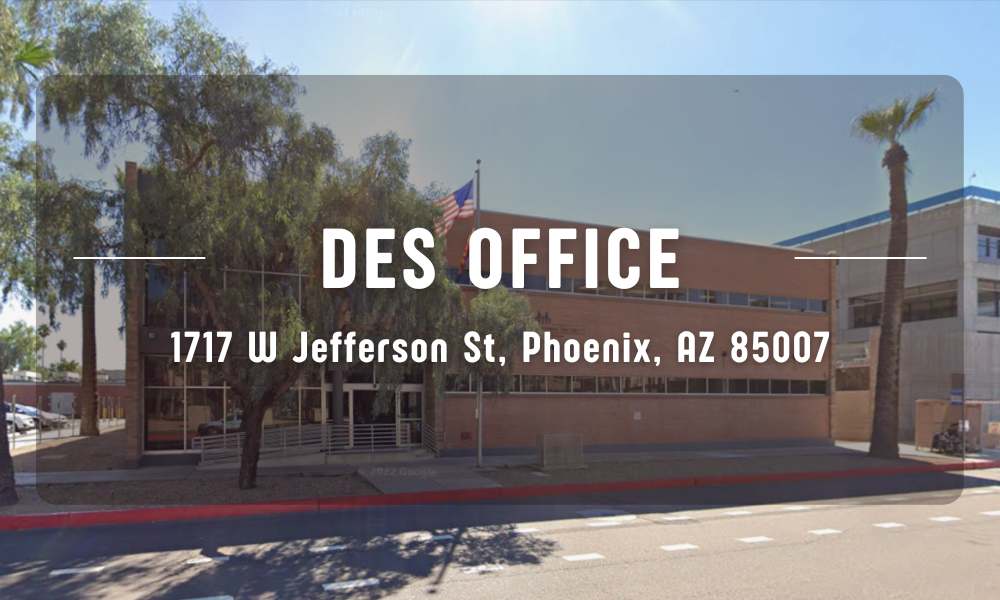
DES emergency rental assistance office in Arizona
The DES office in Arizona where rental assistance applications were processed.

On February 12, 2022, the Arizona DES Rental Assistance program became available to the inhabitants of Phoenix.

Residents of the City of Phoenix who had previously applied for and received emergency rental assistance or utilities through the City of Phoenix or Wildfire were not eligible for the DES ERAP program.

Applicants could call (602) 534-2433 with any queries about their current application.

Renters in Maricopa (excluding City of Phoenix residents), Pima, and Yuma counties were not eligible for rental assistance through this program, but they may have been eligible for other city- or county-run programs. The section below titled “Other City and County-Operated Programs” provides more information.

Utility-Only Assistance: Renters in ALL 15 Arizona counties could apply for utility-only assistance through the ERAP portal’s Easy Apply feature.

DES Rental Assistance Eligibility Requirements

A renter could receive help with rent and utilities through DES Rental Assistance if they lived in a designated area and met the following federal requirements:

  • Proof that the renter was at risk of being homeless, had unstable housing, or lived in a dangerous place:
    • Notice to vacate
    • Notice of utility shutoff
    • Past due rent notice
    • Past-due utility notice
    • Other signs of unsafe, unhealthy, or unstable living conditions
  • The COVID-19 pandemic impacted the renter or a member of the household.
  • The renter’s household income was less than or equal to 80% of the area median income (AMI).

📊 Data Highlight

80% AMI

Maximum household income threshold for the Arizona Rental Assistance Program. Households earning at or below this benchmark qualified for DES Rental Assistance benefits.

Phoenix Arizona rental assistance program application process
The application process for DES Rental Assistance required supporting documentation.

How to Apply for DES Rental Assistance in Arizona

Applicants applied for assistance with rent and utilities through the ERAP online platform. Paper applications or phone support at 1-833-912-0878 were also available.

Interested renters seeking rental assistance had to provide the following documentation:

  • Lease agreements
  • Photo ID
  • Utility bills
  • Disconnection notices
  • Proof of income
  • Eviction notices
  • Documentation of hardship

Author’s Pro Tip

Easy Apply for Utility-Only Help: The utility-only application process was simplified via Easy Apply, requiring only recent utility bills and a few eligibility questions. No landlord cooperation was required. If you’re an Arizona renter struggling with utility costs today, check with your local Community Action Agency for similar streamlined programs.

DES Rental Assistance Payment Details

Eligible households received up to $3,500 per month for up to 18 months, totaling $63,000. This included past, present, and future months—inclusive of all ERAP assistance previously received.

Payments could be made to renters, utility companies, or landlords (if participating).

Benefit Detail Amount / Limit
Monthly Maximum $3,500
Maximum Duration 18 months
Total Possible Benefit $63,000
Covers Rent + Utilities (past, present, future)
Payment Recipients Renters, landlords, or utility companies

Need Help Finding Rental Assistance?

Even though DES Rental Assistance has ended, you can still access active programs and resources across Arizona.

Explore Current DES Rental Assistance Alternatives →

DES Rental Assistance Appeals Process

If denied rent or utility assistance, applicants could appeal using the ERAP & LIHWAP Appeal Request form within 60 days of the decision.

Anti-Fraud Measures for DES Rental Assistance

DES used ID.me for identity verification to prevent fraud. Applicants were guided via a secure link and instructions.

If ID.me could not be used, applicants could submit paper forms and government-issued IDs. Landlord representatives verified identities via ID.me before submitting financial data.

Suspected fraud could be reported online or by calling (800) 251-2436 or (602) 542-9449.

DES Rental Assistance Eviction Protections

Removal Prevention

ERAP aimed to reduce housing instability from COVID-19. Landlords agreed not to evict for at least 30 days after receiving payment.

Landlords involved in legal proceedings could receive $500 for legal costs. Participation was encouraged to support housing stability in Arizona.

Eviction Moratorium Status

The CDC’s eviction moratorium ended on August 26, 2021. Tenants behind on rent were again at risk.

Programs like the Emergency Rental Aid Program provided support. Legal help was available via azevictionhelp.org and clsaz.org.

Other City and County-Operated Rental Assistance Programs

Residents of Maricopa, Pima, and Yuma counties were ineligible for DES ERAP but had access to local resources. If you live in one of these areas, the programs below may still offer active assistance or referrals.

How to Contact the DES Rental Assistance Program

You could reach the Emergency Rental Assistance Program at 1-833-912-0878, operating Monday–Friday, 8:00 a.m.–5:00 p.m.

Additional Resources for Arizona Renters:

  • Call 2-1-1 Arizona or visit 211Arizona.org for statewide housing resources
  • Connect with your local Community Action Agency for emergency support
  • Explore DES Basic Needs Services for food, utilities, and job assistance
  • Facing eviction? Visit azevictionhelp.org for free legal aid and tenant rights information

Frequently Asked Questions About DES Rental Assistance

Is DES Rental Assistance still accepting applications?
No. The DES Rental Assistance program has officially ended. Applications submitted on or before August 31, 2024 were reviewed during the wind-down period, but no new applications are being accepted. Arizona renters needing help should contact 211 Arizona or their local Community Action Agency.
How much could renters receive through DES Rental Assistance?
Eligible renters could receive up to $3,500 per month in combined rent and utility assistance for a maximum of 18 months, totaling up to $63,000 in benefits. This amount included all past, present, and future ERAP payments.
Who was eligible for DES Rental Assistance in Arizona?
To qualify, renters needed to demonstrate housing instability (such as a past-due rent notice or eviction notice), show that COVID-19 had impacted their household, and have a household income at or below 80% of the area median income. Residents of Maricopa (excluding Phoenix), Pima, and Yuma counties were directed to local programs instead.
Could Phoenix residents apply for DES Rental Assistance?
Yes, the program became available to Phoenix residents on February 12, 2022. However, those who had previously received emergency rental assistance or utility help through the City of Phoenix or Wildfire were not eligible for the DES ERAP program.
Where can Arizona renters find help now that DES Rental Assistance has ended?
Arizona renters can dial 2-1-1 or visit 211Arizona.org for housing resources. Community Action Agencies offer emergency support, and those facing eviction can access free legal aid at azevictionhelp.org or clsaz.org.

Find Active Rental Assistance in Arizona

The DES Rental Assistance program may have ended—but your options haven’t.

  • ✓ Statewide housing and utility resources
  • ✓ Community Action Agency emergency support
  • ✓ Free legal aid for eviction defense
  • ✓ DES Basic Needs Services referrals

Connect with active programs serving Arizona renters today.

Yuma County – Emergency Rental Assistance Program (ERAP)

0

WE CAN PROVIDE ASSISTANCE WITH PAYING RENT AND UTILITIES.

Families whom the COVID-19 epidemic has either directly or indirectly impacted can receive assistance through the Emergency Rental Assistance Program in Yuma County. Renters whose lives have been upended by the epidemic are eligible for assistance with their monthly rent and utility bills of up to $3,500 for a period of up to eighteen (18) months. The initiative hopes to prevent people from being evicted from their homes by providing financial assistance with rent and utilities. It is not necessary to be behind on your payments to receive assistance. Any assistance requested for overdue rent or utility bills will be granted before any further assistance is provided.

The following types of assistance are available:

Rent that was past due, rent that was due in the future, late fees, deposits, and utility bills were all outstanding.

Who is qualified to apply?

All applicants must demonstrate that they have been economically damaged in some way, either directly or indirectly, as a result of the epidemic.

Your income must be at or below 80 percent of the median income in the region, or it must be equal to that amount.
During the same period, no other organization has made an offer of assistance. There must be a rental lease agreement in place.

What is the procedure for submitting my application?

Yuma County and the Western Arizona Council of Governments have collaborated on the development of this program (WACOG). Applicants will be able to download, fill out, and submit applications on WACOG’s Emergency Rental Assistance website beginning on March 15, 2021. You can also contact WACOG at this number: 928-217-7144. The application can be obtained in paper form and can be found at the following locations:

  • Yuma WACOG office is located at 1235 S. Redondo Center Drive.
  • The Yuma County Administration building is located at 198 S. Main Street in Yuma.
  • Each Yuma County Library branch
  • Neighborhood Services, Second Floor, Yuma City Hall
  • Somerton City Hall is located at 143 N. State Avenue, Somerton.
  • San Luis City Hall is located at 1090 E. Union Street in San Luis.
  • Wellton Municipal Building- 28364 Oakland Avenue, Wellton

DOWNLOAD the Yuma County Rental Assistance Application (English)

DESCARGUE la Solicitud de asistencia de alquiler del condado de Yuma (español)

Dashboard Information:

                YEAR-TO DATE AS OF  MAY 6, 2022
Number of Applications Submitted       1732
Number of Approved Applications       1221
Total Amount Issued $6,254,722.90